
Restoring the Dryland
- Award Year: 2025
- Award Category: Residential Design
- Award Designation: Merit Award
- Client: Confidential
- Location: Eagle County, Colorado
- Photography credit: Brandon Huttenlocher/Design Workshop, Inc.
Summary
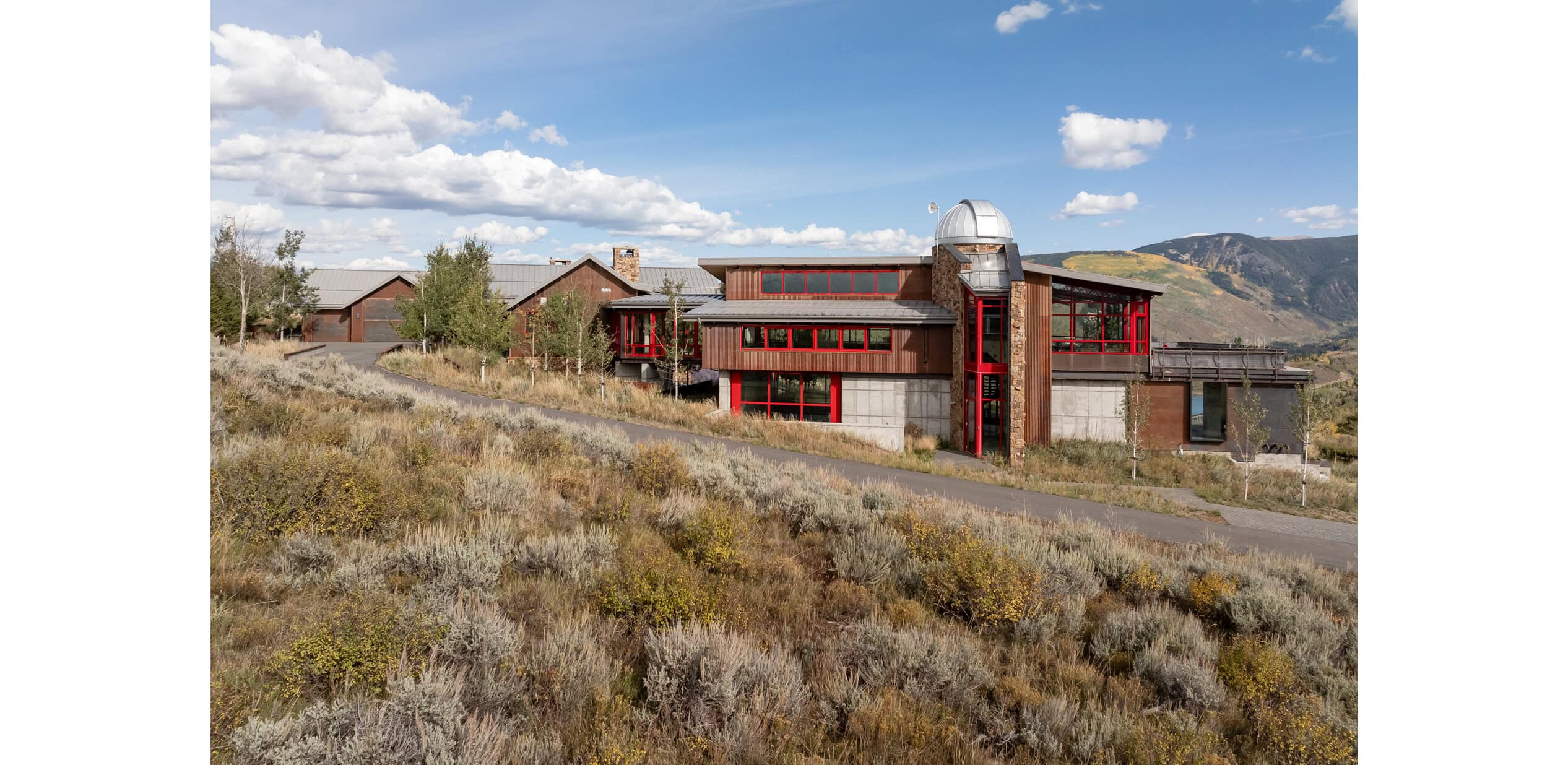
Set on an arid, windswept mountainside in Colorado’s Western Slope, this project redefines the relationship between home and high-desert landscape. Originally constructed in the early 2000s and later expanded with a contemporary concrete addition, the residence offered sweeping views of the high country—but stood amid a disjointed, ecologically compromised landscape. Consumptive lawns demanded constant irrigation, ten-foot wildlife fencing severed migratory routes, and dense coniferous trees obstructed views while increasing wildfire risk.
Through a complete transformation grounded in ecological understanding, the landscape architect reimagined the site as a living demonstration of dryland restoration. Gone are the bluegrass turf, fuel-laden conifers, and lifeless pond. In their place: fire-wise strategies, xeric plant communities, and a deeply rooted native ecology, framed by interventions of stone and steel that reflect the industrial vernacular of the architecture. The result is a case study in how bold, site-specific design can elevate both beauty and performance—inviting the profession to view dryland environments not as constraints, but as opportunities.
Narrative
Context and Background
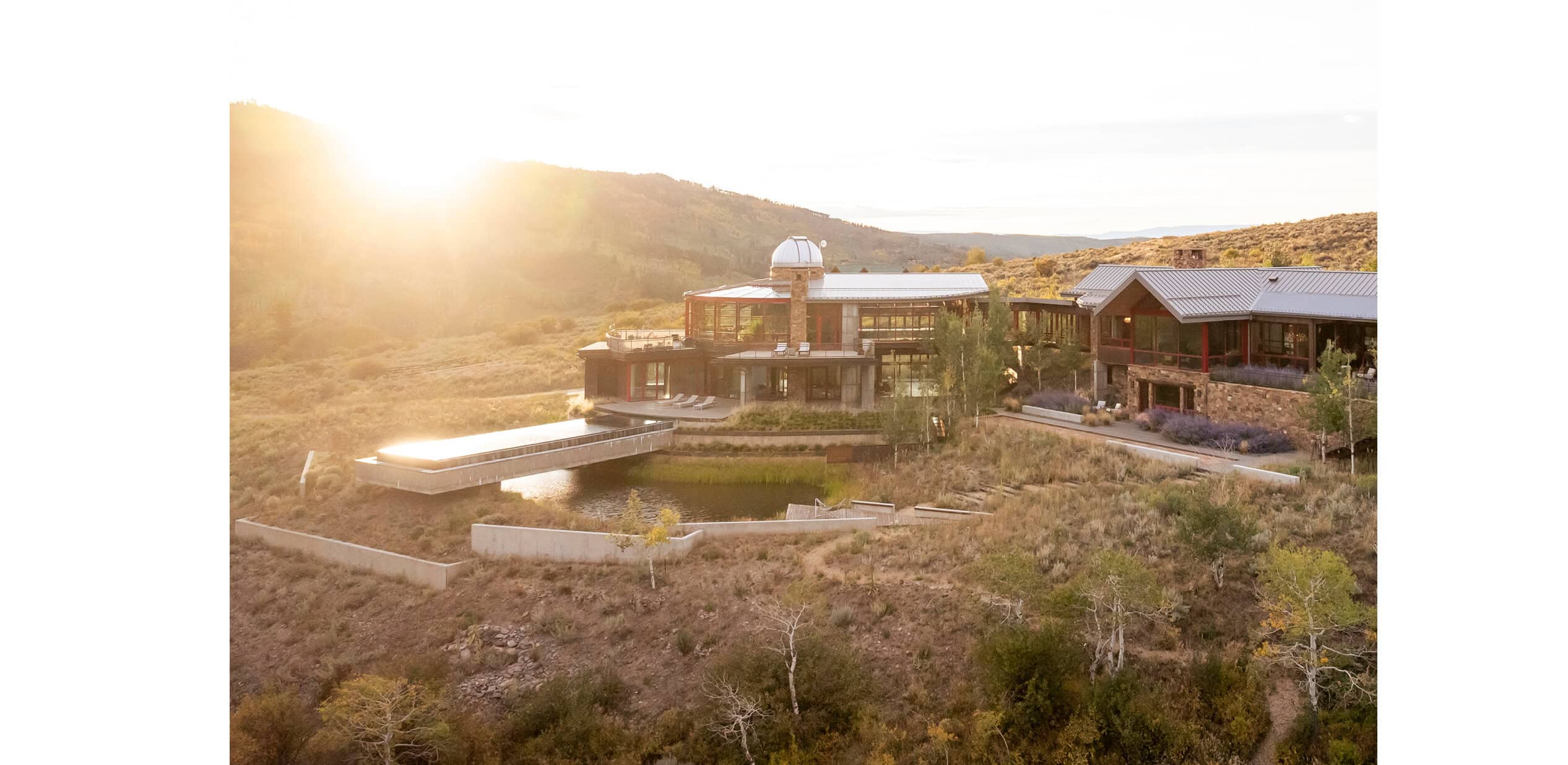
Perched on a high-desert ridge in Colorado’s High Country, the property sits within the Foothill Shrublands ecoregion of the Southern Rockies—a transitional zone between high-elevation forests and the drier, lower plateaus. At 8,500 feet above sea level, it offers celebrated panoramic views of the Continental Divide to the east, while enduring the region’s intense sun, wind, and seasonal extremes. The original home, a traditional mountain structure of stone and timber built in the early 2000s, later gained a striking contemporary addition of concrete and industrial steel—forming a bold counterpoint to the original design.
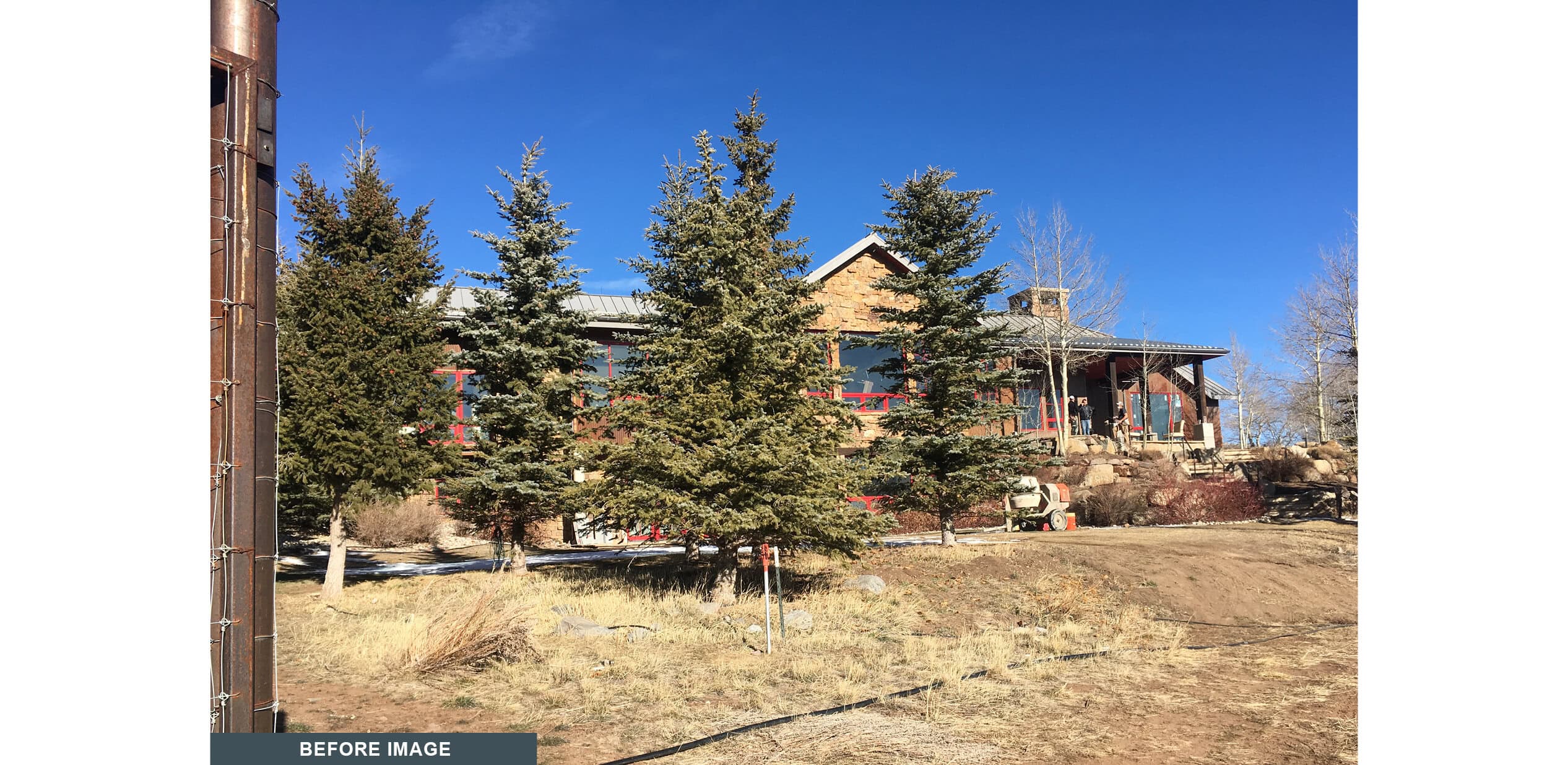
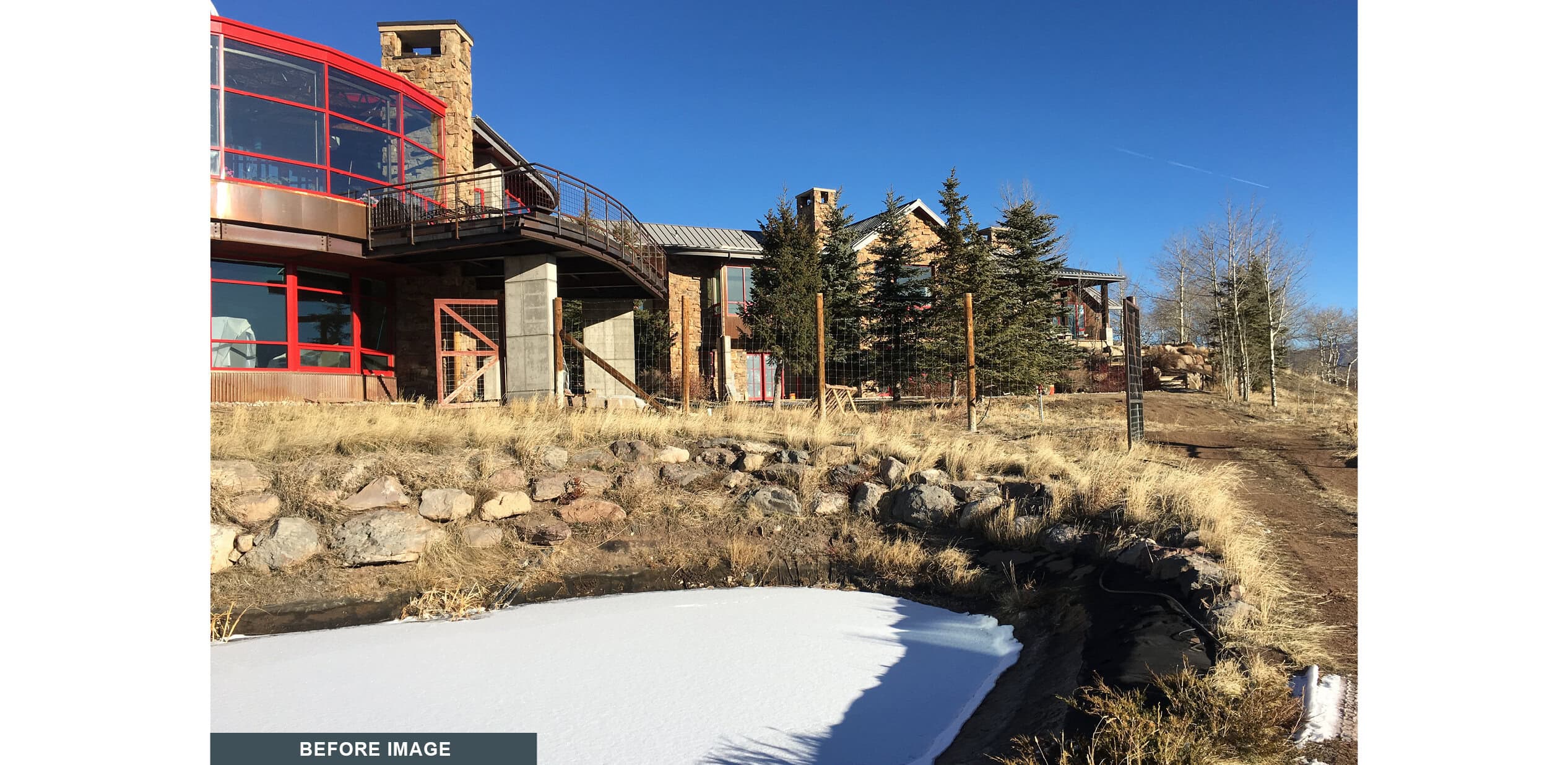
Despite the visual drama of its setting, the property’s landscape had been heavily altered—transformed into a space that turned its back on its arid context. Dense spruce trees, planted too close to the home, blocked views and heightened wildfire risk. A water-hungry bluegrass lawn required constant irrigation, while a leaking fire-suppression pond exposed its liner and unnatural boulder edging. Encircling it all, a 10-foot wildlife fence severed ecological connections to the surrounding landscape.
A Transformative Vision
In recent years, new owners—longtime visitors turned full-time residents—acquired the property, drawn to its sweeping views and motivated by a desire to live more deeply and in harmony with the elements of the Mountain West.
The Act of Editing
Our design process began with an essential act of editing—stripping the site back to something closer to its predevelopment condition. This included dismantling the perimeter fence, removing the thirsty turf, and clearing dense spruce trees. These early moves allowed both the clients and the design team to better understand the site’s true opportunities and constraints, observing it from various vantage points within the home, which itself was undergoing a full interior renovation and exterior refresh. This process also revealed how previous development had significantly altered the natural hillside, carving it into artificial “benched” terraces to support irrigated lawn.
Industrial Inspiration
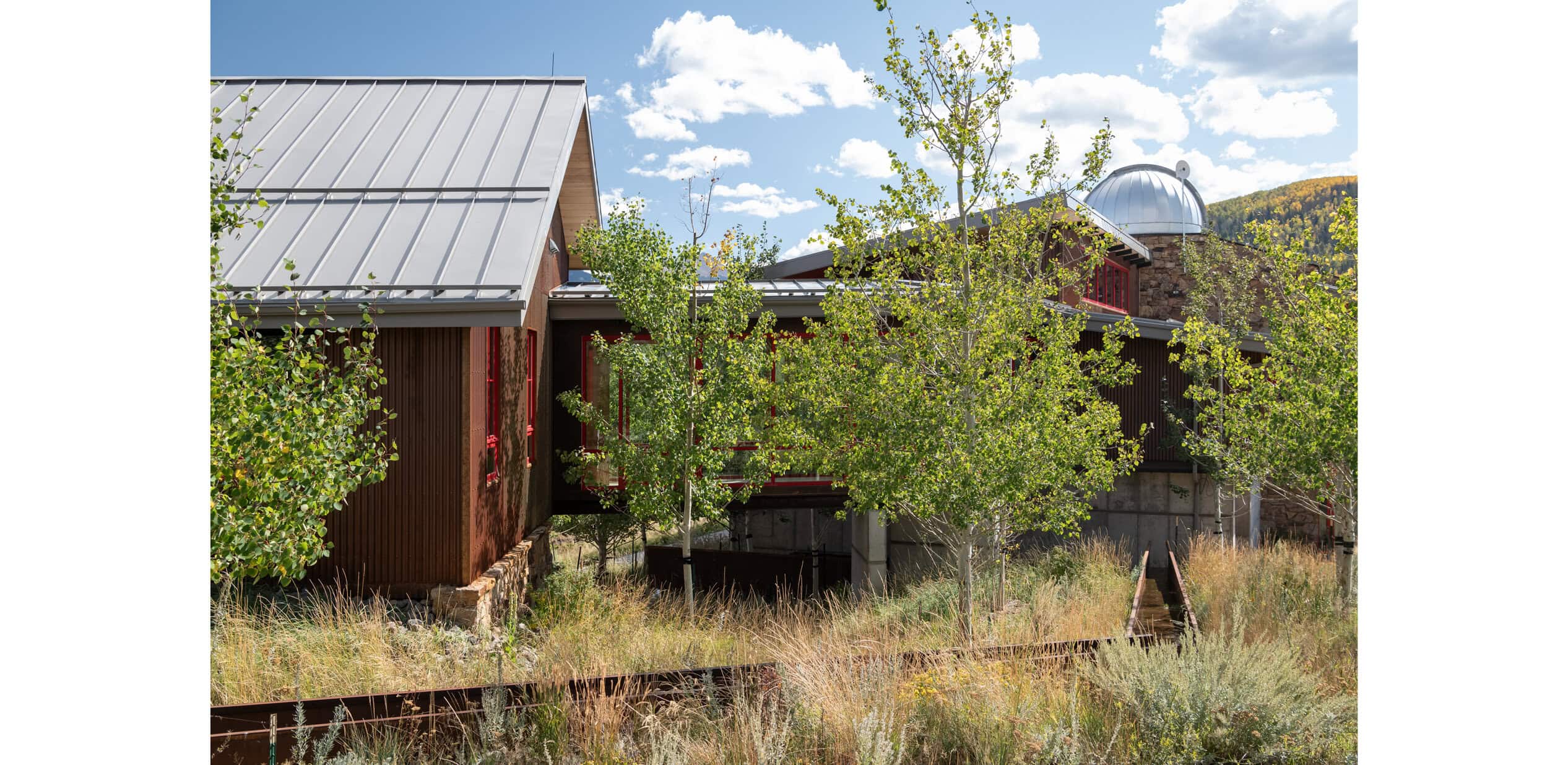
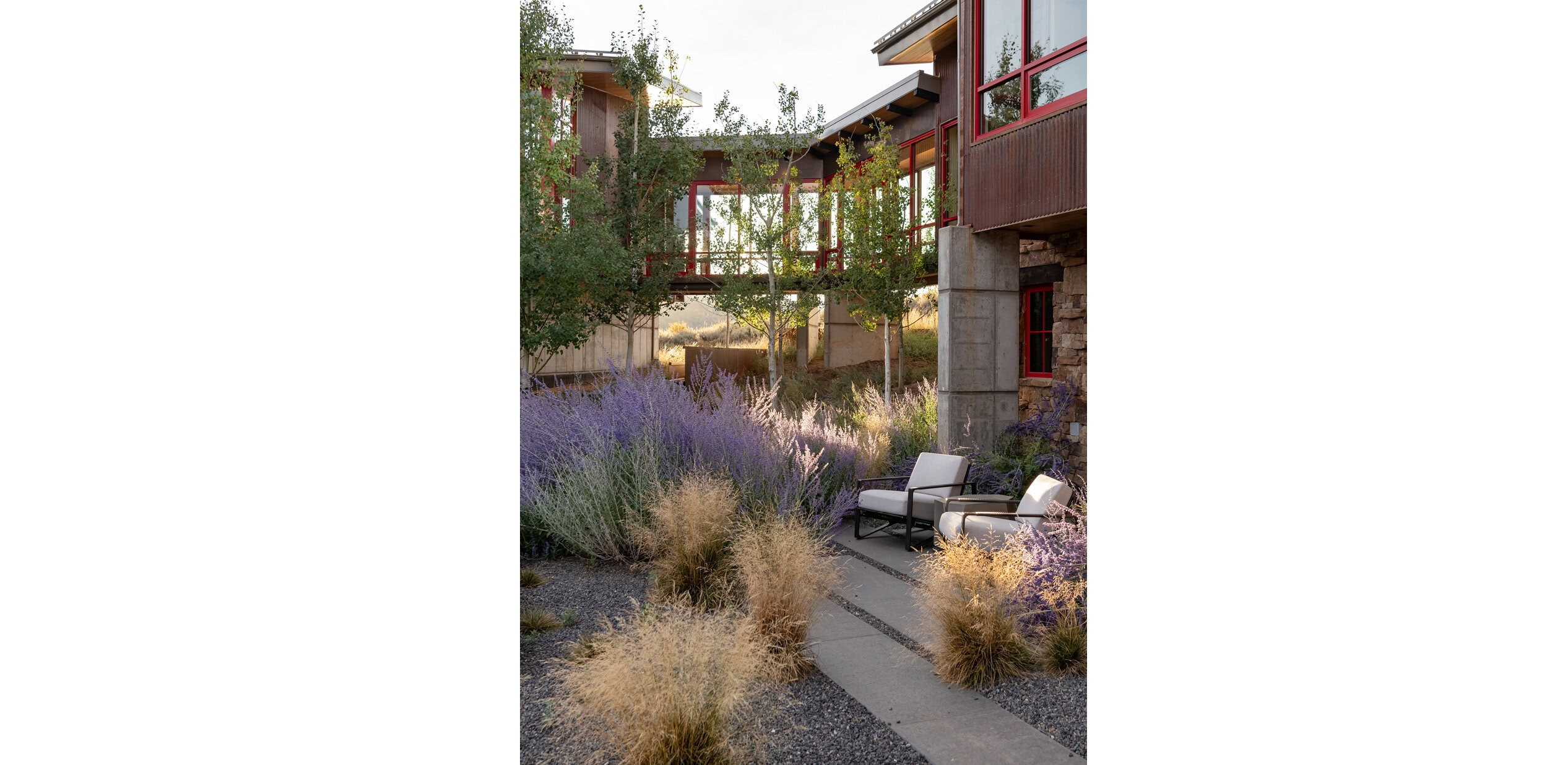
Building on that foundation, the design reshaped the site with restraint and intention—drawing from the home’s material language of stone, steel, and raw concrete to guide a deliberate set of landscape interventions rooted in restoration. In place of precious detailing, the design team embraced the intrinsic character of each material: the evolving patina of weathered steel, the honesty of paneled concrete, and the tactile richness of natural stone. These elements ground the design in its powerful setting. To complement them, native dryland plantings reclaim the slope, reestablishing the site’s ecological identity and reinforcing the bond between architecture and land.
Infrastructure Art
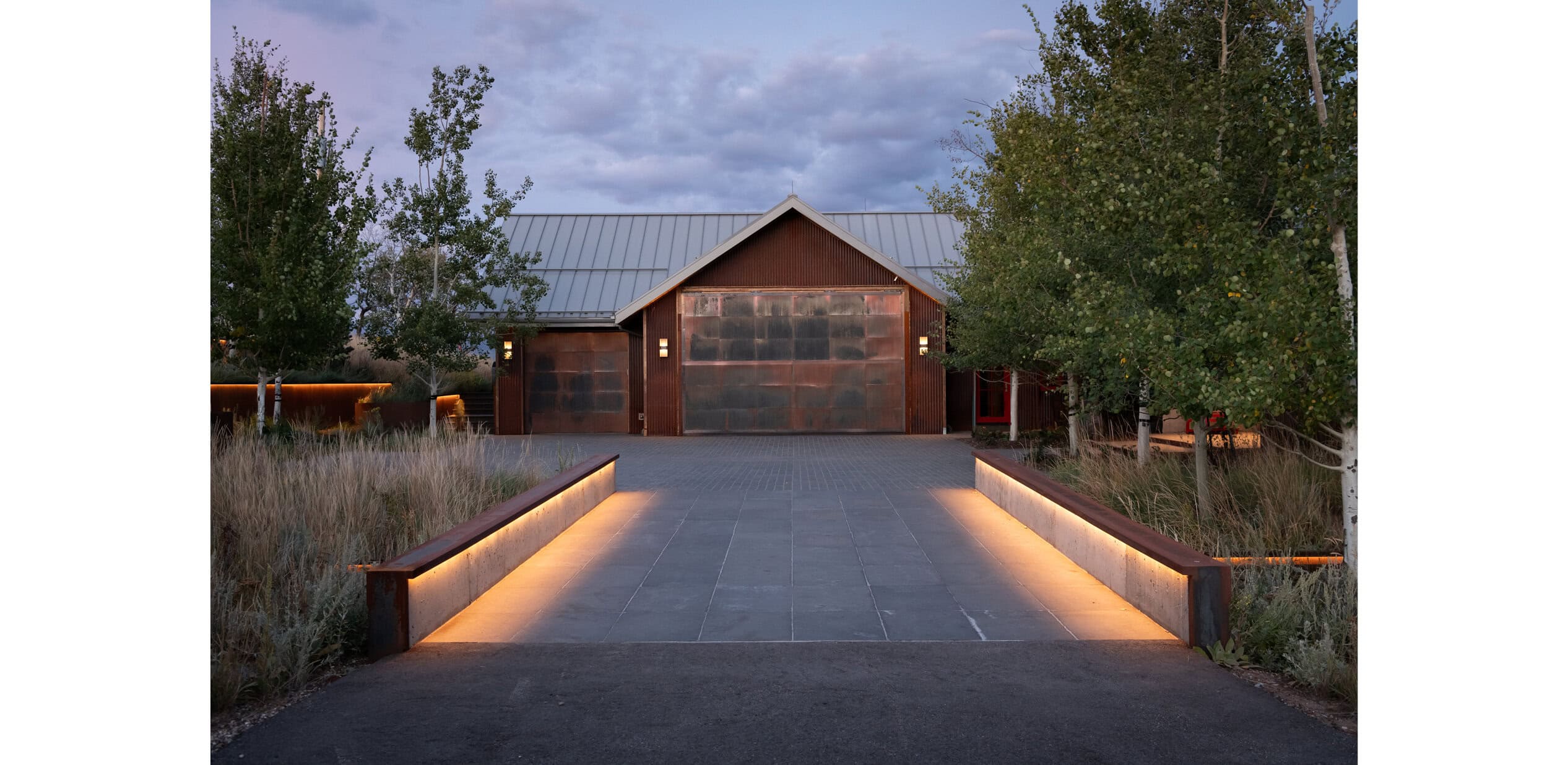
The original arrival court, carved from the hillside and surfaced in asphalt, lacked spatial relationship to the home’s entry and its surrounding context. In close collaboration with the broader design team, a new vision emerged—opening the formerly enclosed stone façades to reveal direct views into a protected courtyard and beyond to the expansive mountain landscape. This move elevated the role of the autocourt, brought natural light and nature into the home’s primary living spaces, and reactivated the hillside beyond as both a visual anchor and experiential moment.
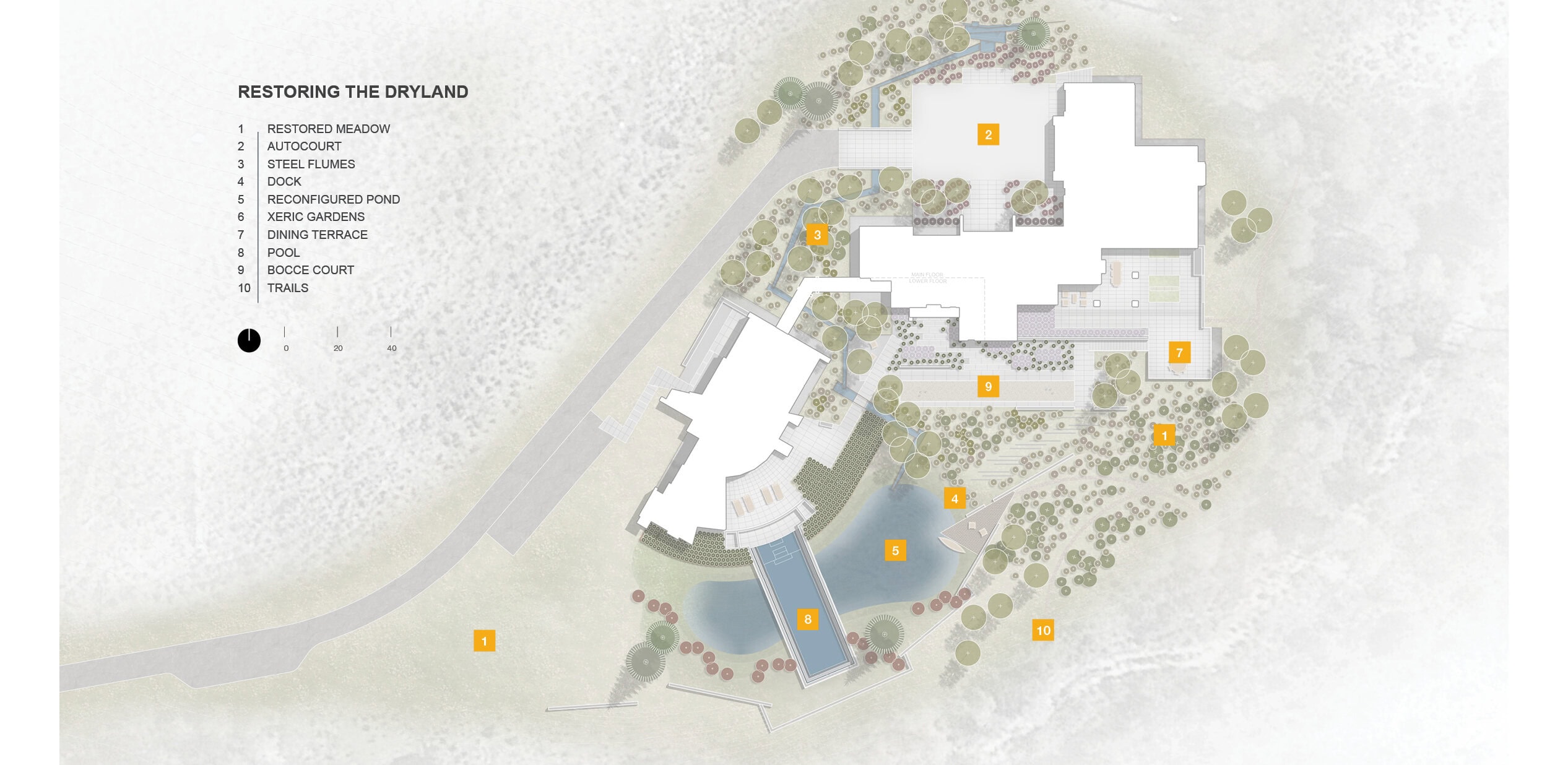
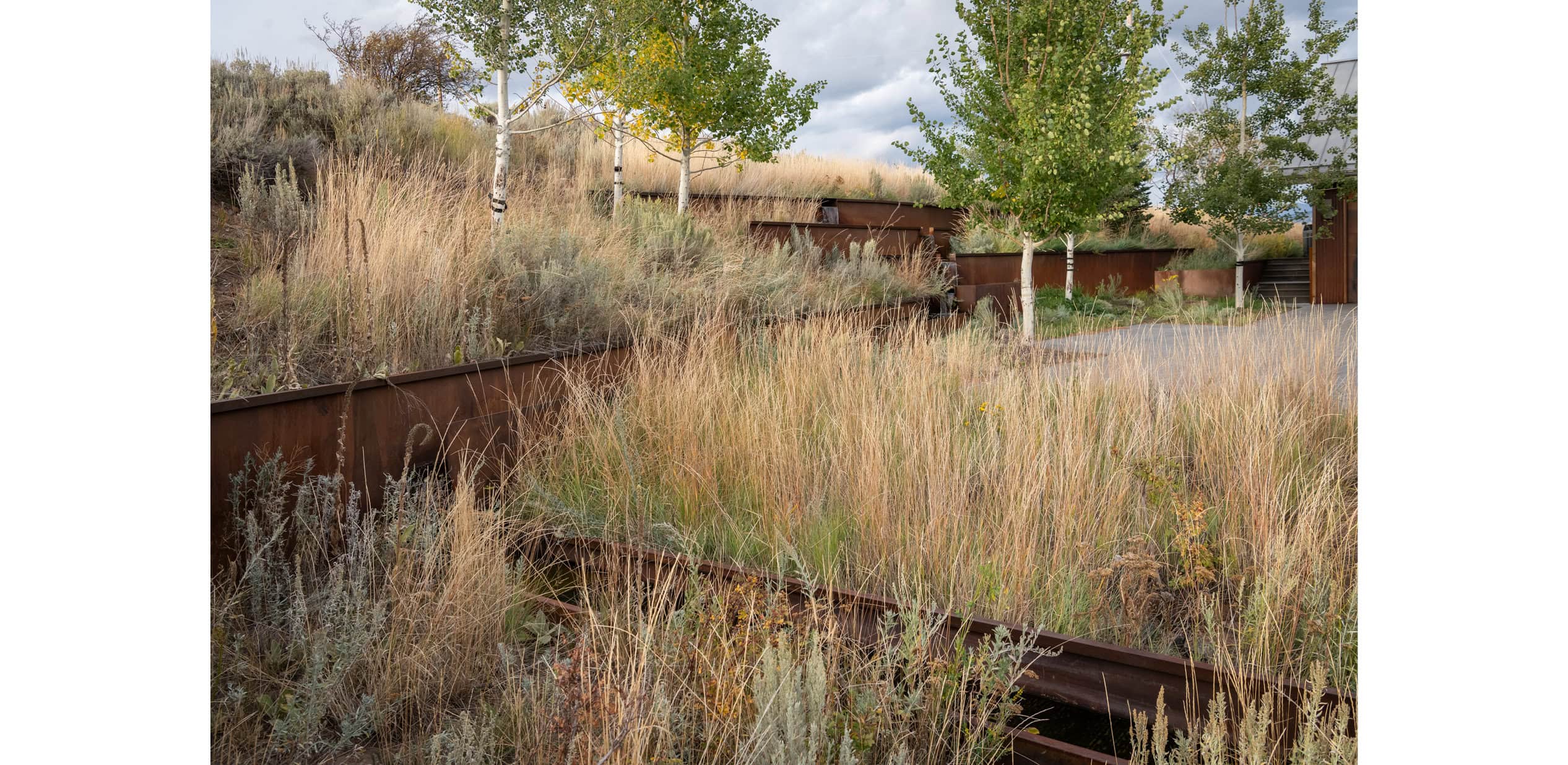
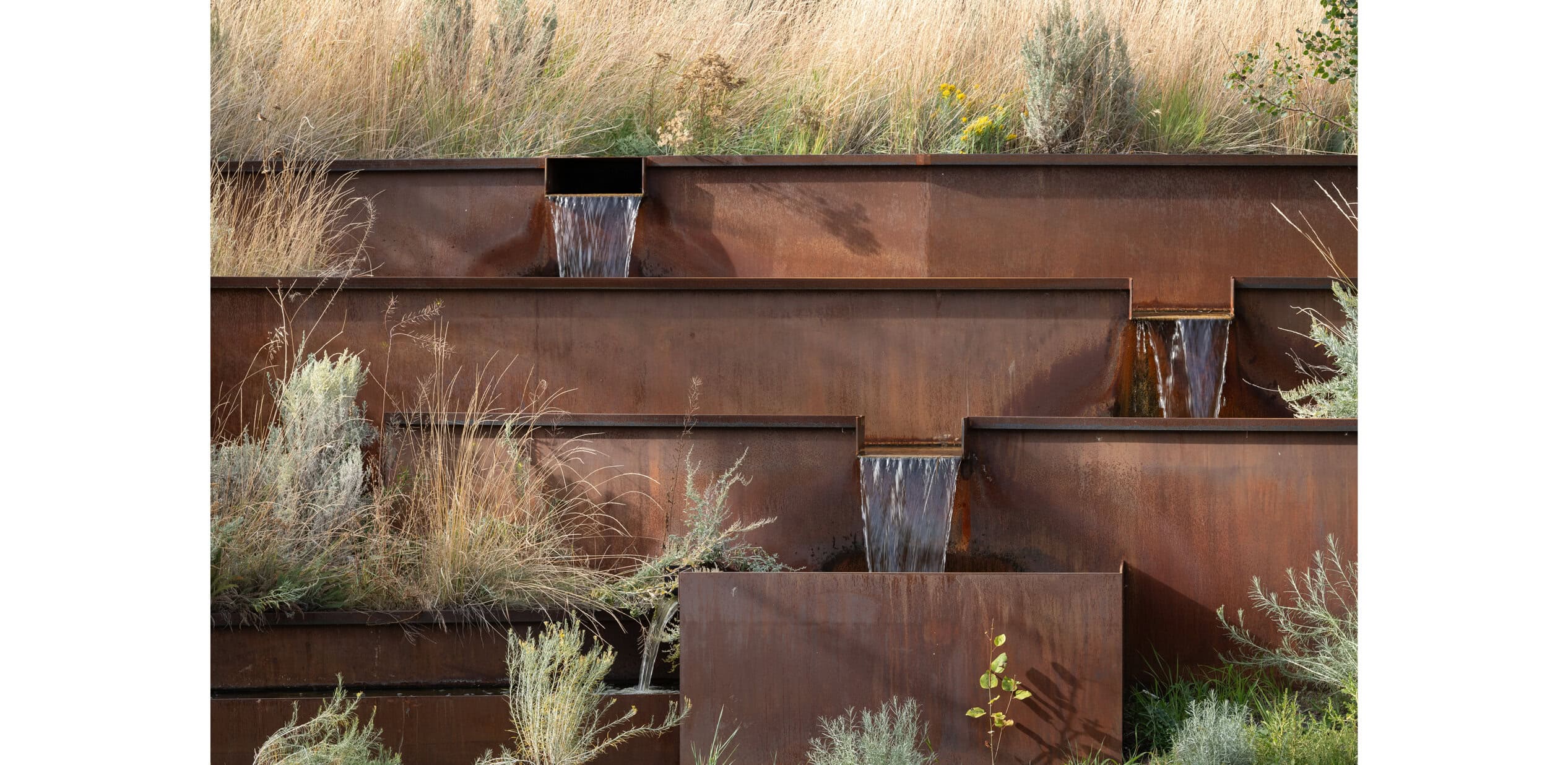
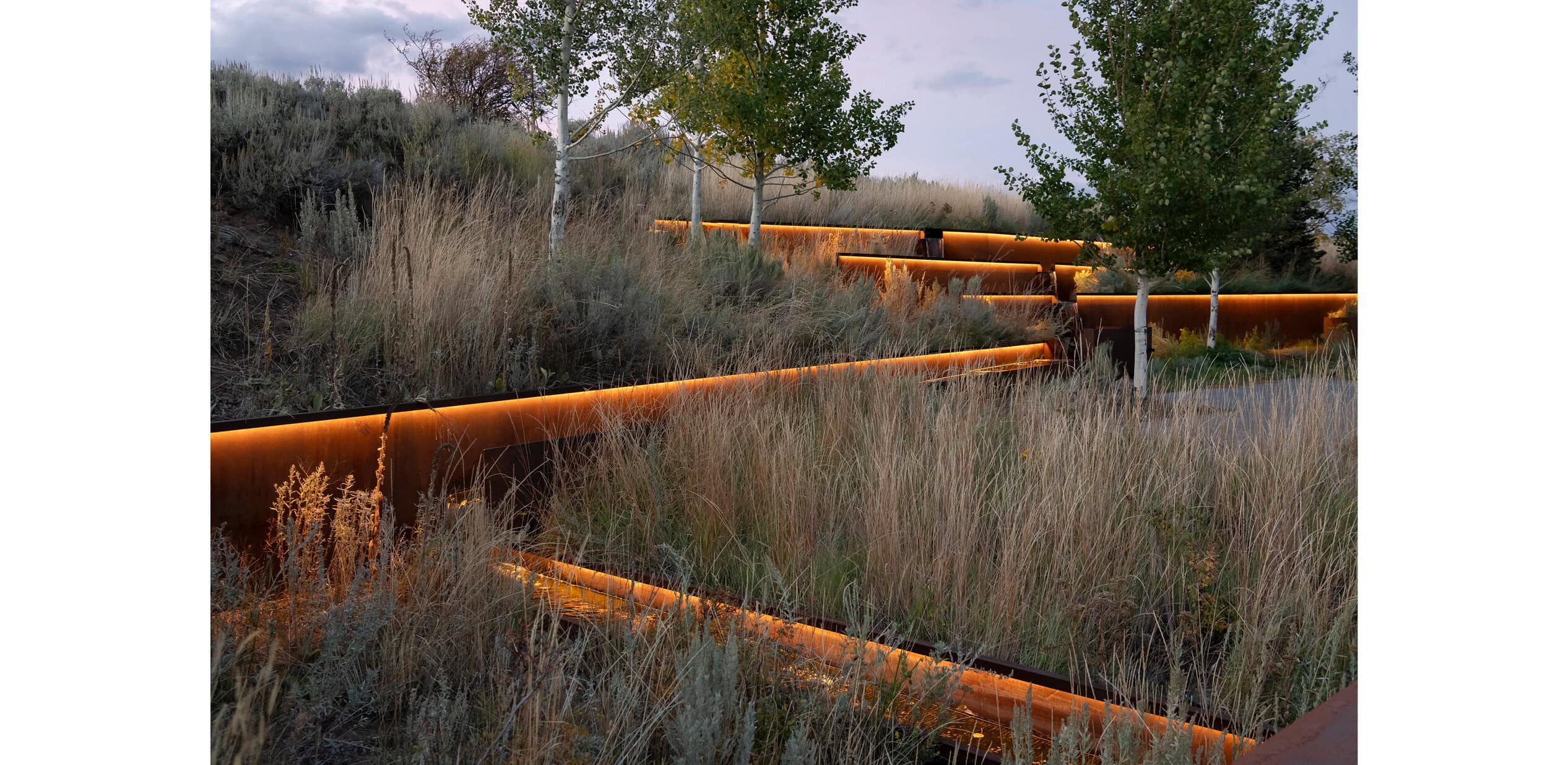
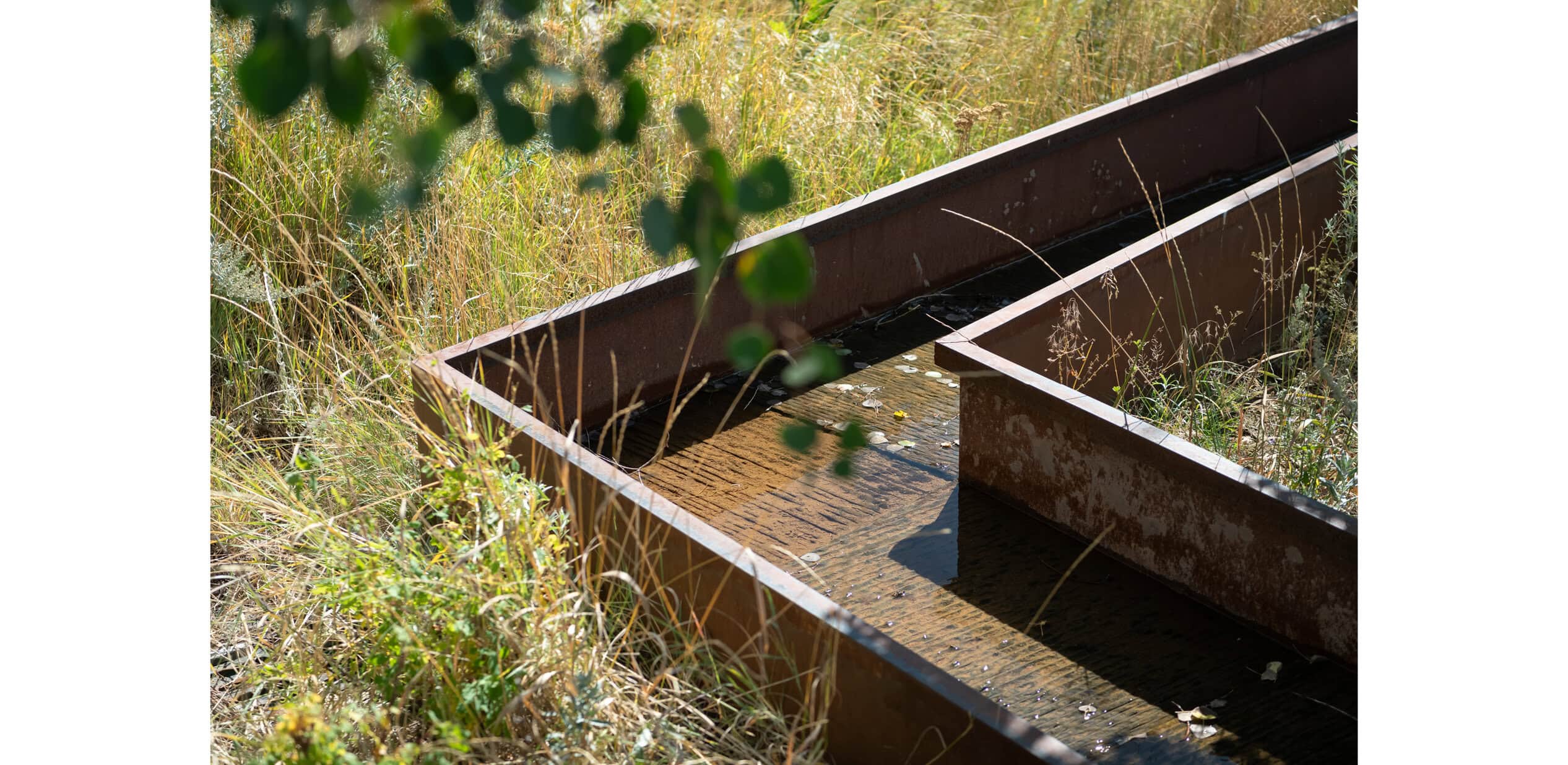
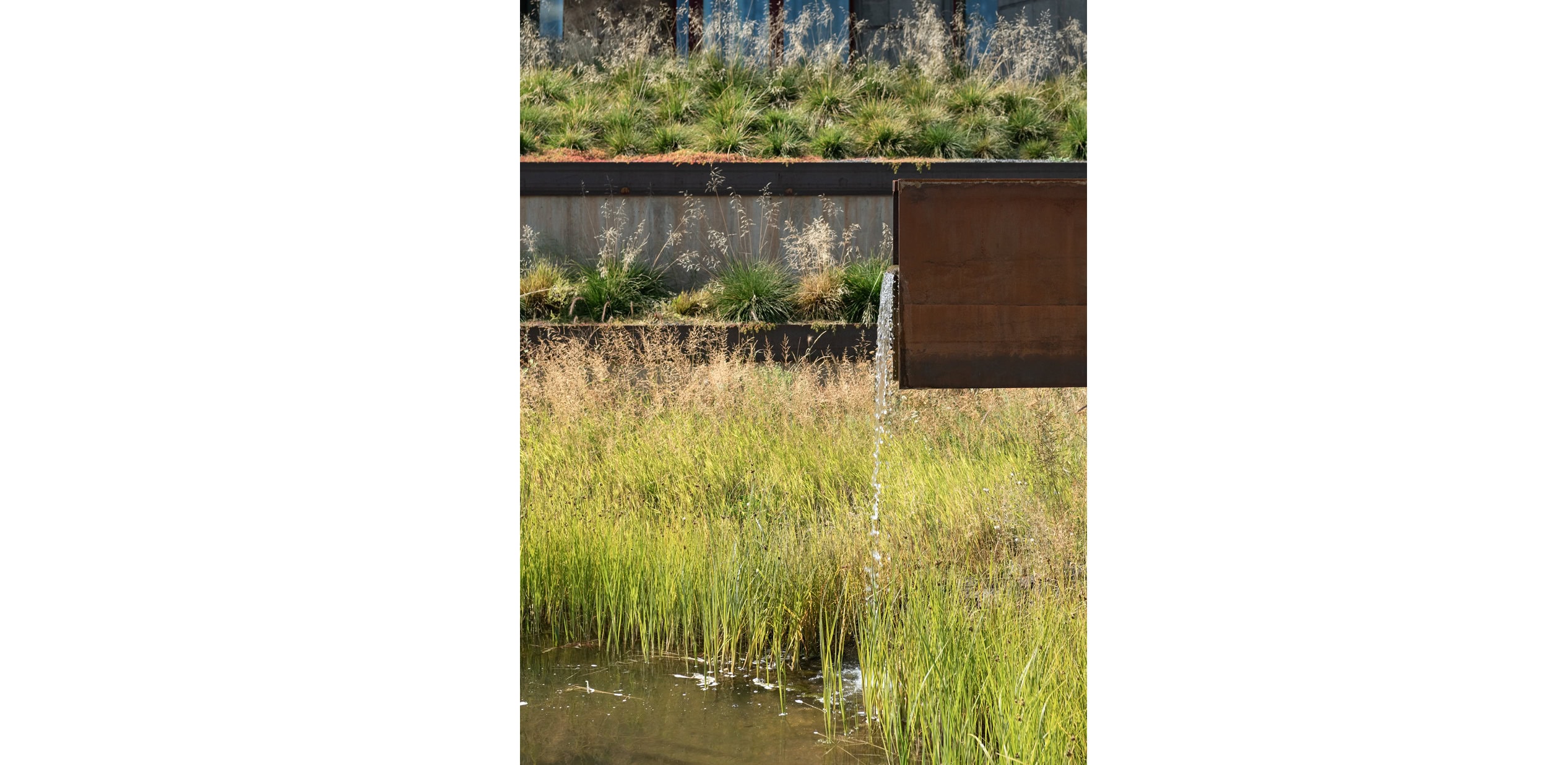
Seizing this opportunity—and addressing a concurrent need to improve aeration in the lower pond—the team introduced a sculptural steel feature that functions as both visual terminus and aquatic infrastructure. Layered corten steel walls retain the hillside, slicing through restored sage and grasses while channeling a narrow runnel of water. The runnel, a sculptural nod to Colorado’s historic mining flumes, incorporates ten linear weirs that animate a gentle flow, enhancing water quality and creating rhythmic moments along its descent. At night, integrated linear lighting transforms the feature into a glowing thread—subtle, evocative, and alive.
Ecological Restoration and Wildfire Planning
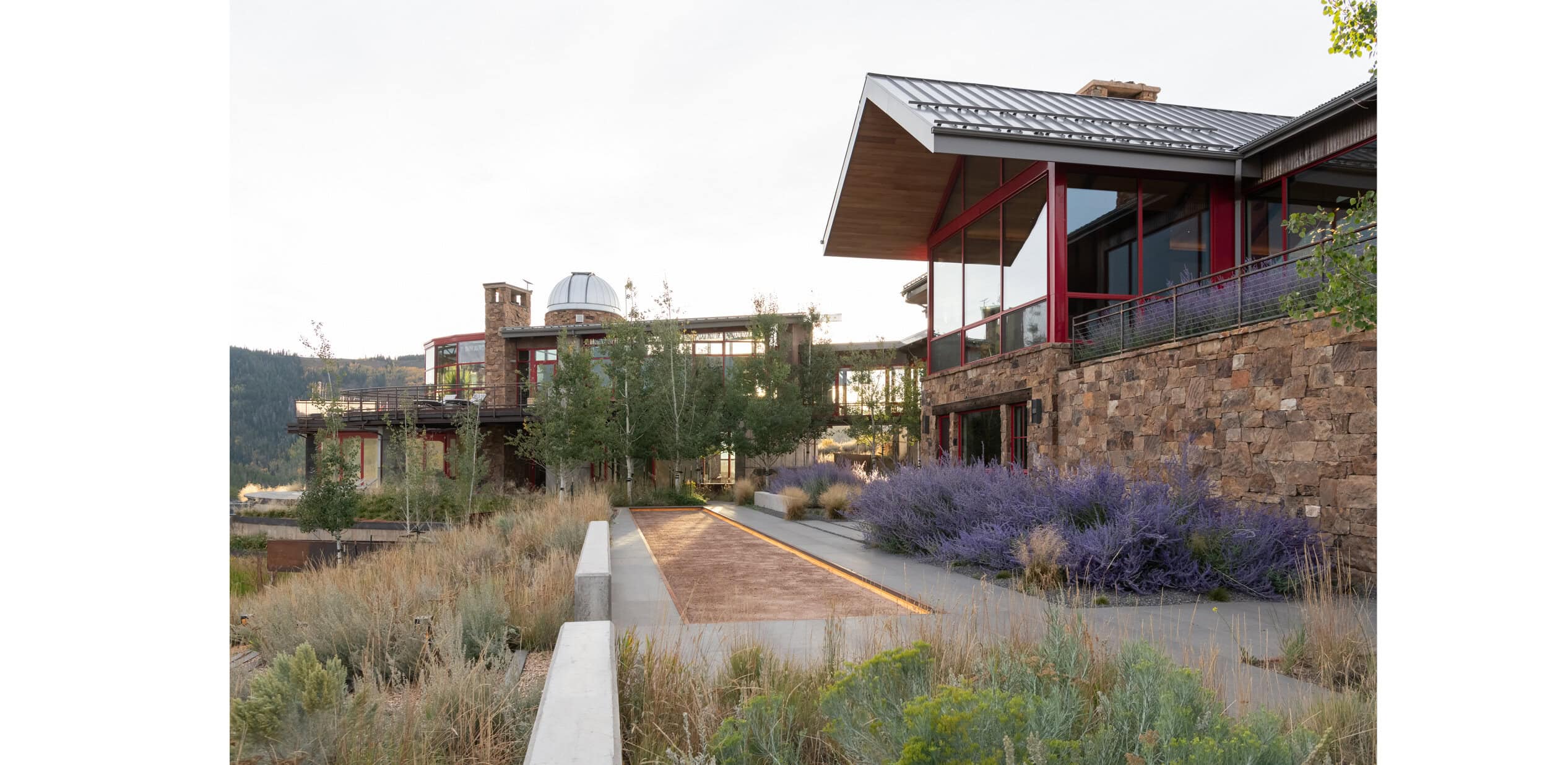
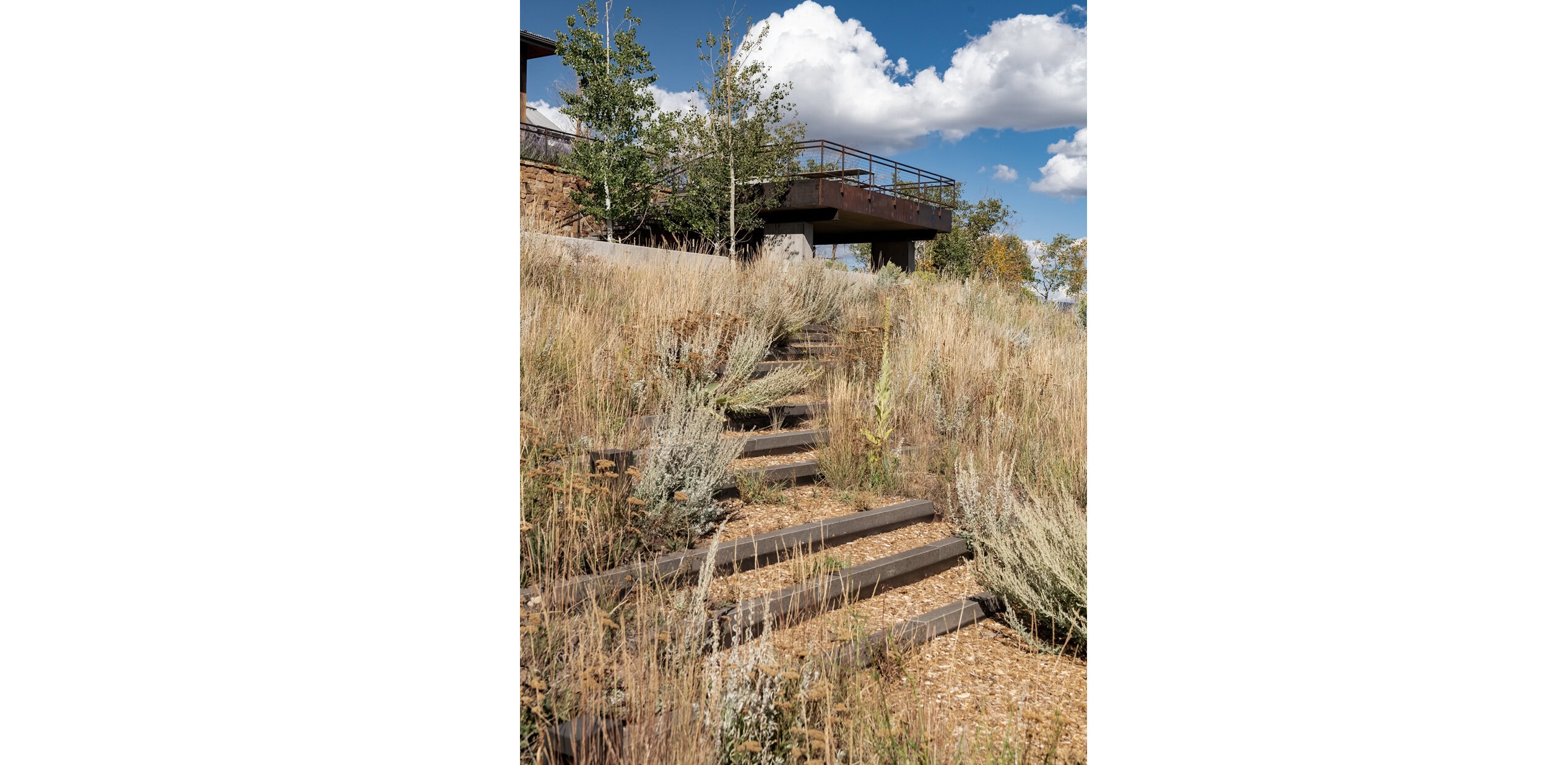
Regrading efforts allowed the team to reestablish native slope profiles and lay the foundation for dry meadow restoration. During site analysis, the design team studied adjacent meadows—cataloging plant species, spatial distribution, and vegetative structure. This research informed a richly textured mosaic of dryland species, including rabbitbrush, penstemon, sagebrush, mountain mahogany, and a variety of drought-tolerant grasses. These plant communities replaced the former lawn with resilient meadows that require no irrigation once established.
The design integrates a range of strategies to mitigate the region’s susceptibility to wildfire. Around the immediate perimeter of the home, a textured band of repurposed stone riprap replaces combustible mulches, creating a defensible buffer and reducing ignition risk. Further downslope, a once-degraded pond now serves dual roles—as an ecological amenity and a functional fire suppression reservoir. The design replaced its steep, armored banks with gently contoured slopes that support native riparian vegetation. These softened edges restore ecological connectivity and provide safe access for wildlife—including the property’s resident deer—without risk of entrapment.
Programmatic Integration
Envisioned as a multi-generational retreat, the landscape blends active and passive recreational experiences through bold, industrial-inspired insertions grounded in xeric ecological restoration. From the upper level, a dining terrace extends to a cantilevered steel deck tucked within a restored aspen grove—inviting guests to engage with the site’s sweeping mountain views.
At the lower level, intimate stone and gravel terraces extend from bedrooms and immerse visitors in dryland plantings. A linear bocce court, nestled into the meadow, offers a gathering space for family recreation. From here, a steel and basalt stair gently descends the hillside, landing in quiet zones designed for reflection and connection.
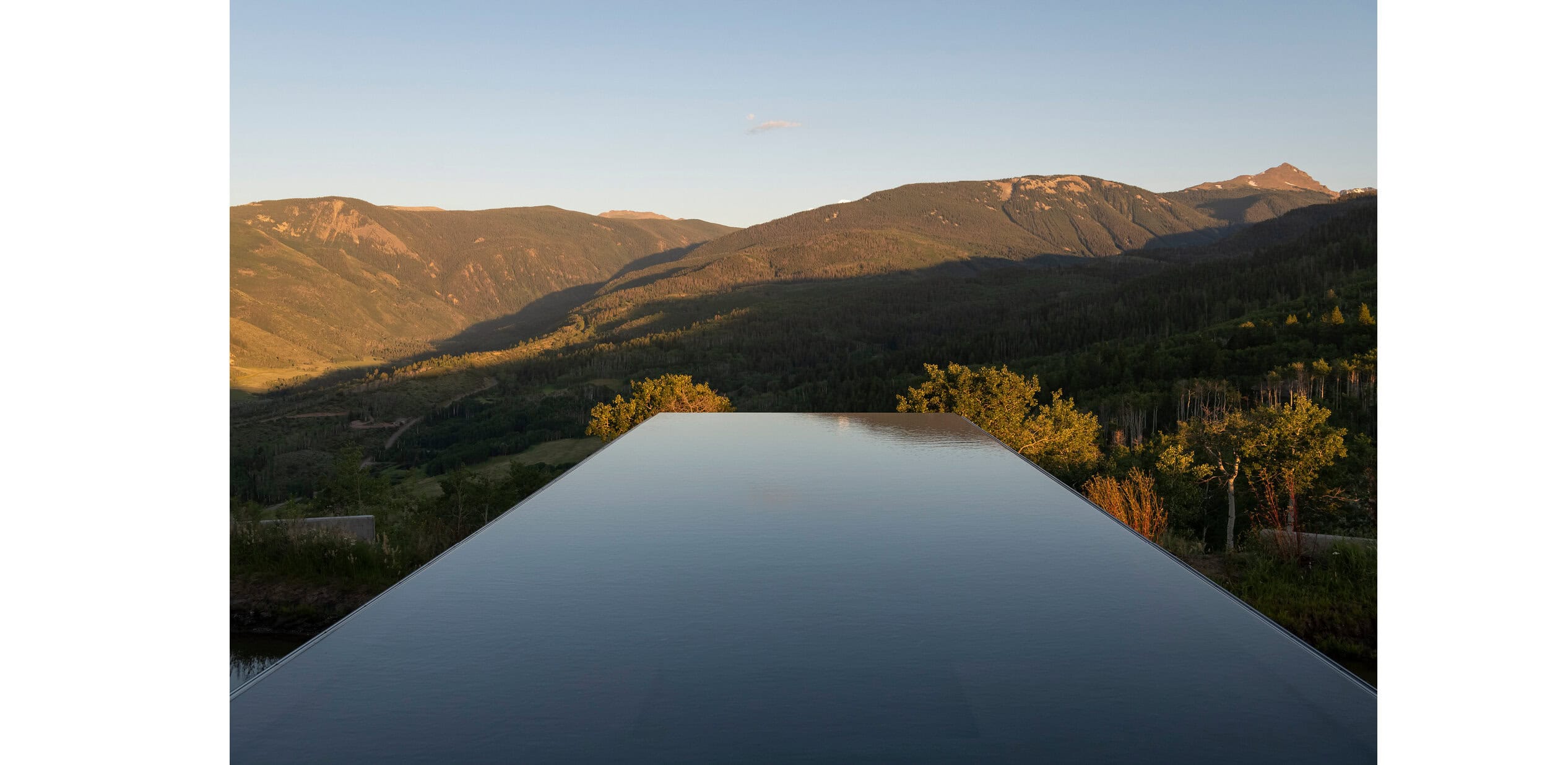
The pond, once detached from daily life, now features a small dock that echoes the geometric rigor of the home’s architectural language. From the contemporary addition, which houses the recreational wing, a radial deck extends outward, culminating in a dramatic design gesture: a lap pool—elevated and immersive—suspended above the land in a bold expression of structure, water, and view.
Impact and Significance
The project redefines what a dryland mountain landscape can be—fire-adapted, water-efficient, and ecologically vibrant. By removing artificial interventions and reestablishing native systems, the design restores habitat, improves site hydrology, and positions landscape architecture as a powerful tool for climate resilience and leadership.
Diversity, Equity, and Inclusion Project Features
N/A
Plant List
Tree
- Colorado Spruce
- Quaking Aspen
Shrubs
- Serviceberry
- Big Mountain Sagebrush
- Mountain Mahogany
- Red Twig Dogwood
- Rabbitbrush
- Little Spire Russian Sage
- Diabolo Ninebark
- Dwarf Fragrant Sumac
- Wood’s Rose
Perennials
- Tufted Hair Grass
- Indian Ricegrass
- Fringe Sage
- Big mountain Sagebrush
- Rubber Rabbitbrush
- Wheatgrass
Beautiful return to native plantings with intentional design details.
Team Members
Landscape Architecture – Design Workshop, Inc.
- Principal – Mike Albert, FASLA
- Project Manager – Ben Roush, ASLA
- Landscape Designer – Xiaojian Fan, ASLA
- Landscape Designer – Matt Moritz, ASLA
- Photographer – Brandon Huttenlocher
Architecture
- RKD Architects
Interior Design
- Studio James
Civil Engineering
- Yarnell Consulting
Irrigation Designer
- Hines Irrigation
Structural Engineering
- Monroe and Newell
Lighting Designer
- David Craige Lighting
General Contractor
- Coleman Custom Homes
Landscape Contractor
- Del’s Garden Center
Documents and Media
Planning Docs (if applicable):