
The Tapestry Block Vision Plan
- Award Year: 2025
- Award Category: Small Budget, Big Impact in Our Region
- Award Designation: Honor Award
- Client: The Colorado Health Foundation
- Location: 1799 Pennsylvania St Denver, CO 80203
Summary
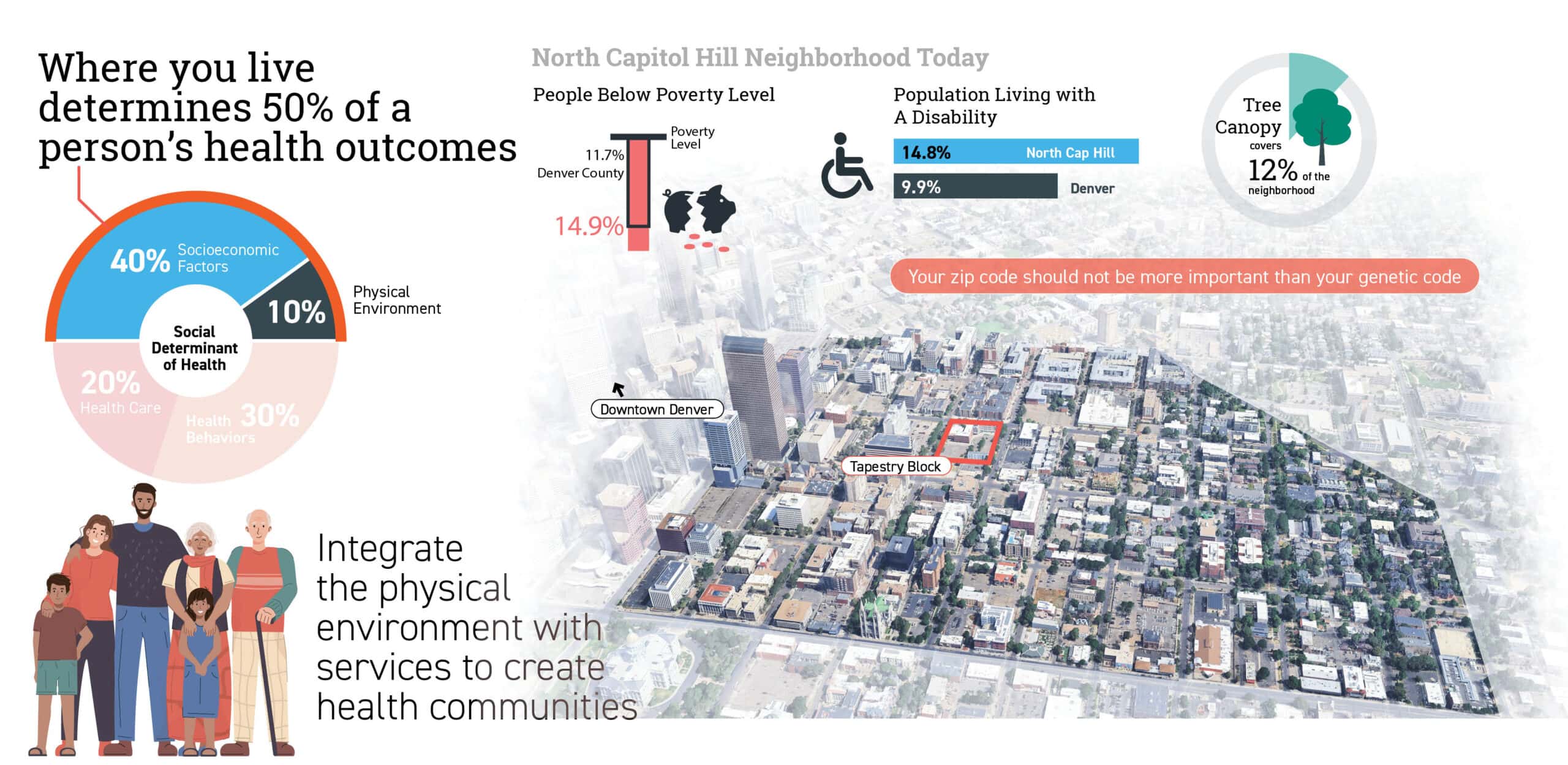
The Tapestry Block Vision Plan reimagines affordable housing as a platform for healing, connection, and inclusive placemaking. It creates courtyards and green spaces specifically designed to support health and resilience for multigenerational families. Grounded in the social determinants of health, the plan recognizes that housing, access to nature, mobility, social connection, and safety are interdependent foundations of well-being.
This vision transforms a typical city block through trauma-informed, culturally responsive, and cost-conscious landscape strategies that address these determinants together. The design emphasizes spatial clarity and daily usability: layered outdoor rooms invite play, gathering, and wellness; stormwater features serve as both ecological infrastructure and educational tools; and street edges become safe, walkable, and welcoming thresholds.
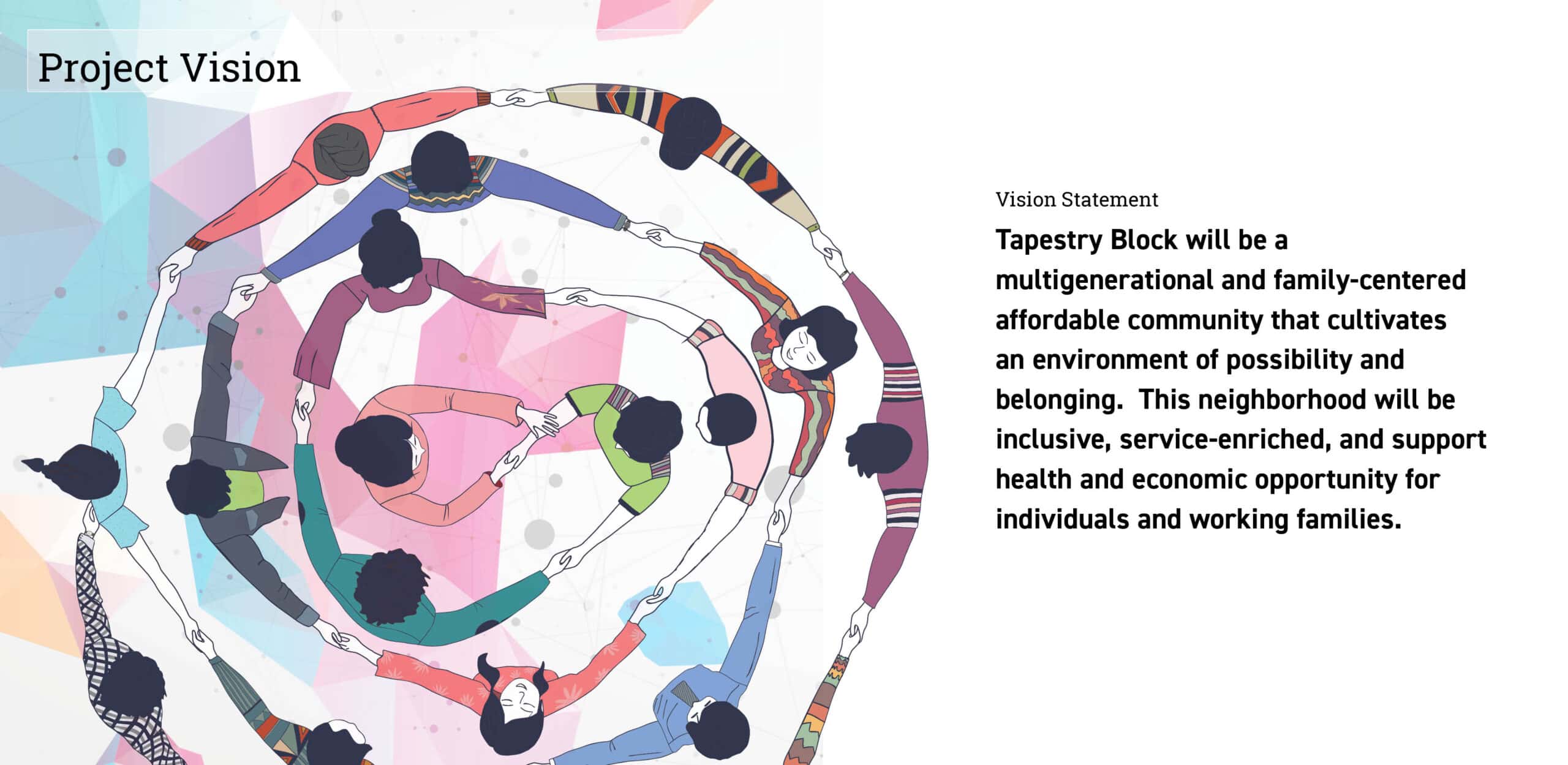
By centering families, cultural expression, and intergenerational life, the plan challenges market-driven models that displace working families from city centers. In a city where rising costs push families to the margins, Tapestry Block, reframes affordable housing as a catalyst for health equity and community empowerment. It reclaims urban land to serve those most often excluded from economic and social opportunities.
Narrative
Purpose and Approach
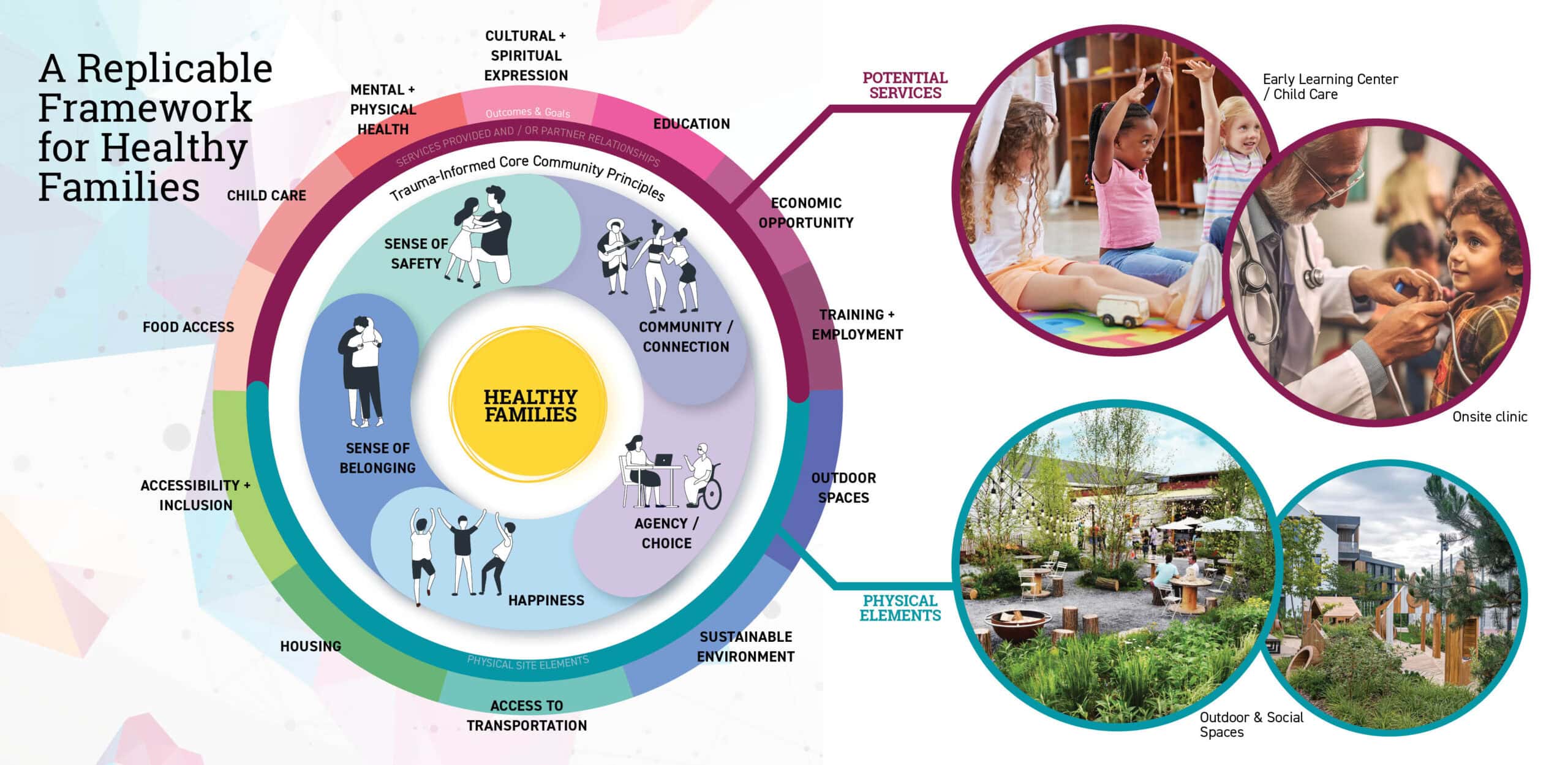
The Tapestry Block Vision Plan presents a bold, multidisciplinary approach to affordable housing that integrates the built environment with the full spectrum of social determinants of health, including access to nature, safety, mobility, social connection, and cultural belonging. This vision positions landscape architecture as a catalyst for systemic change, shaping not only access to shelter but the everyday conditions that influence public health, safety, and community well-being.
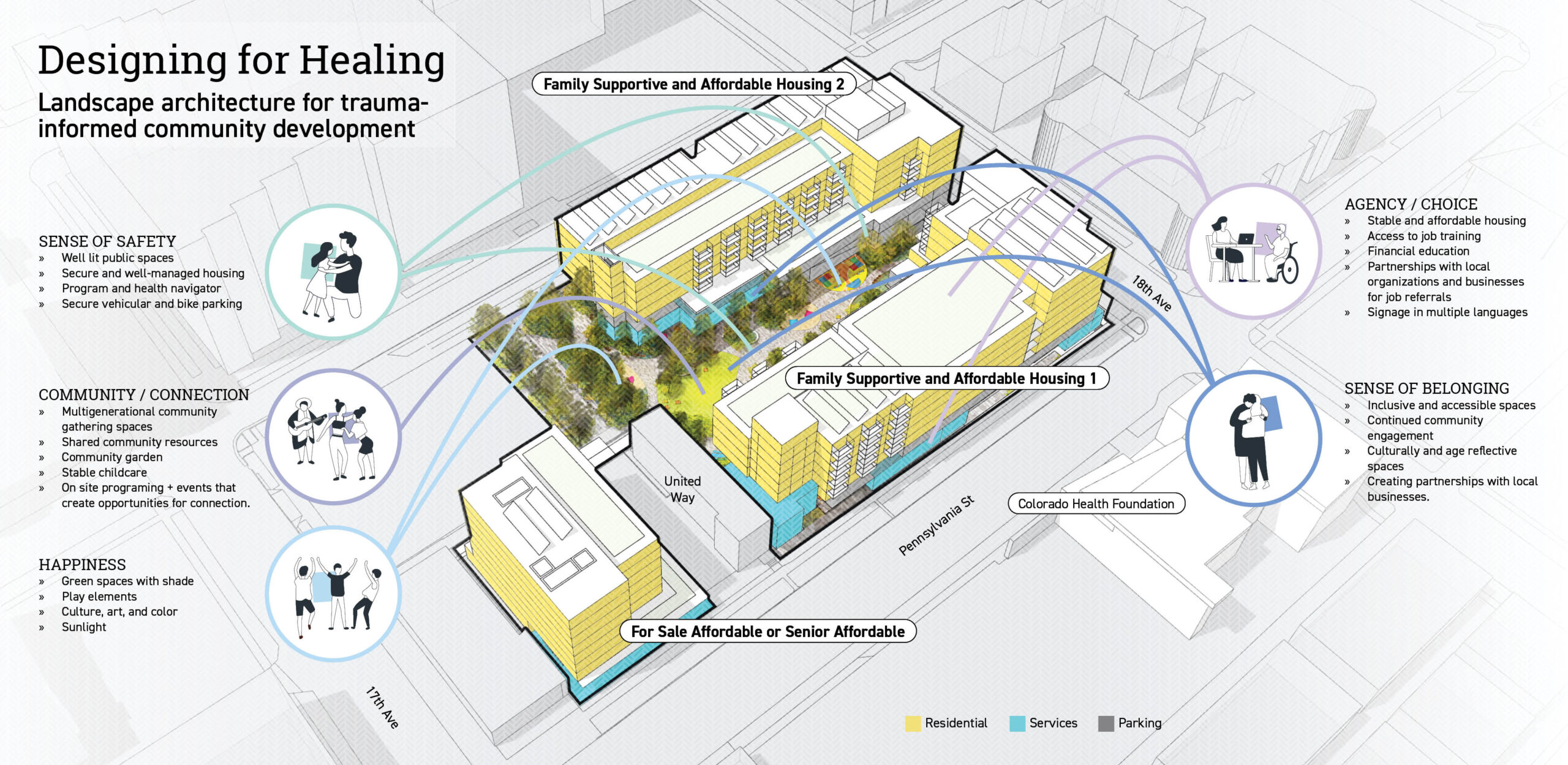
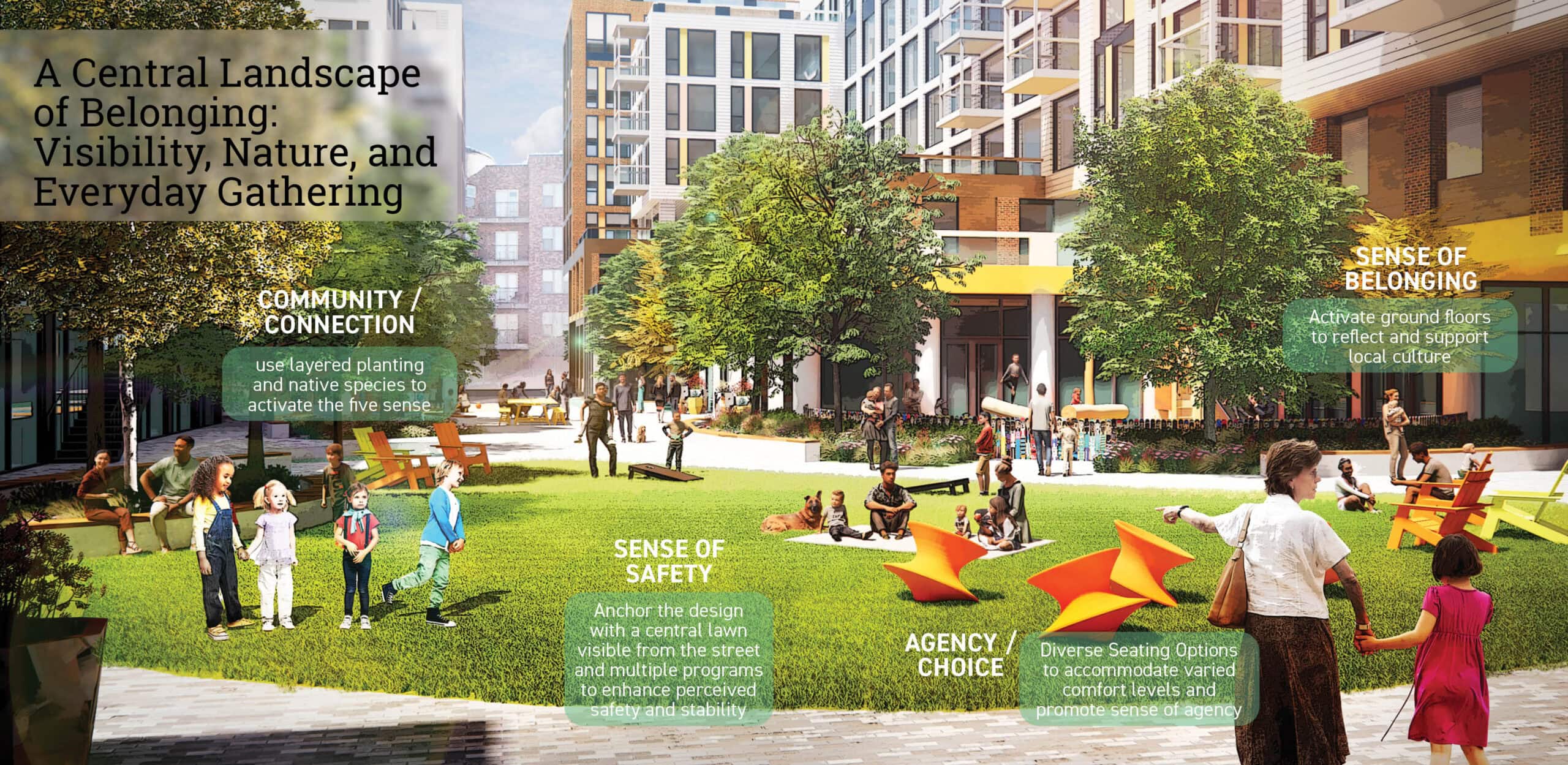
Centered on the needs of multigenerational households in an urban context, the plan fosters a neighborhood rooted in connection, opportunity, and resilience. The landscape architect led the development of a holistic framework that integrates physical site design with service-based programming, guided by five core planning principles: sense of safety, community/connection, agency/choice, happiness, and belonging. These values shaped every element of the design, from courtyard layouts and stormwater gardens to flexible gathering spaces and culturally responsive play environments.
With a planning budget below typical urban redevelopment efforts, the project maximizes spatial, ecological, and social value. The result is a replicable model demonstrating how thoughtful, cost-conscious design can advance health equity and respond to urgent social needs in a rapidly unaffordable city landscape.
Role of the Landscape Architect
The landscape architect served as the lead designer and planner, responsible for both the spatial design of the outdoor environment and the integration of social programming into the physical plan. Collaborating closely with architects, developers, service providers, and community stakeholders, the landscape architect facilitated a deeply collaborative process that prioritized lived experience, health equity, and trauma-informed design.
Rather than designing in isolation, the landscape architect acted as a translator and connector, bringing together voices from across disciplines and community sectors to ensure that the physical spaces would reflect the values and needs of the people they serve. This leadership role extended from visioning and framework development to outcome-based implementation strategies. By combining spatial design with community outreach, the project exemplifies landscape architecture’s potential as a tool for public health, resilience, and systemic change.
Context and Integration
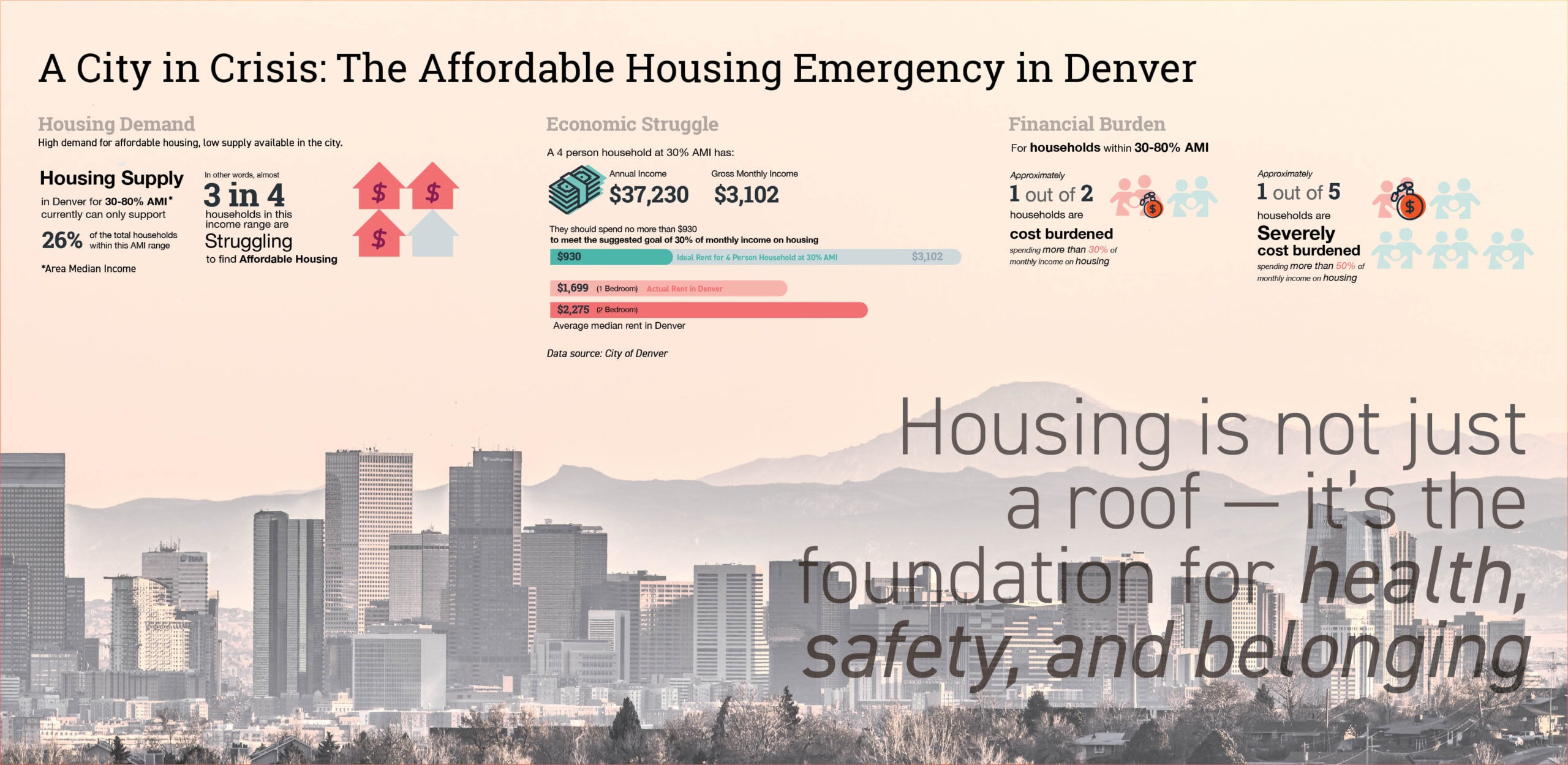
Located in Denver’s North Capitol Hill, a neighborhood experiencing rapid gentrification and displacement of working-class families, the Tapestry Block responds to multiple social and environmental challenges. While centrally located near hospitals, transit and major bike routes, the area lacks affordable, family-friendly housing, safe play spaces, and essential services such as childcare. Over 75% of households in the neighborhood are without children, and rates of asthma, diabetes, and child obesity are higher than city or state averages. These disparities are compounded by a lack of culturally affirming green space and proximity to one of the city’s most active crime hotspots.
Environmental stressors are also acute: the site is located in one of Denver’s highest-risk heat zones, with limited tree canopy and expansive impervious surfaces. Public parks are sparse and under-programmed, and crossing major arterials to reach healthy food and education resources presents barriers.
The Tapestry Block Vision Plan responds to this layered context by reclaiming a full city block for community well-being. The plan is intentionally woven into the neighborhood’s fabric, redefining the block not as an isolated development, but as an open, connected, and inclusive landscape that supports equity, access, and long-term resilience.
Special Factors and Design Challenges
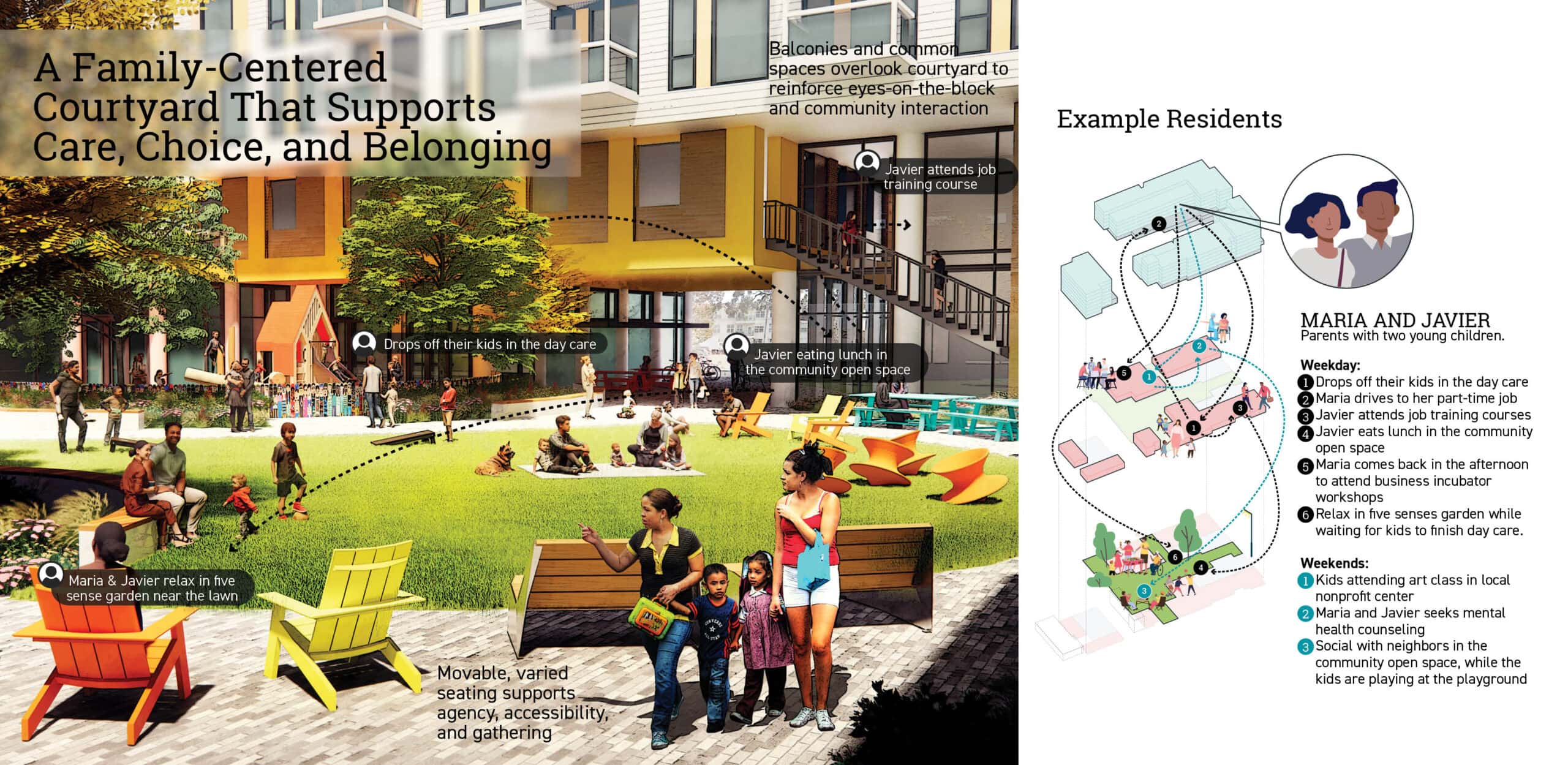
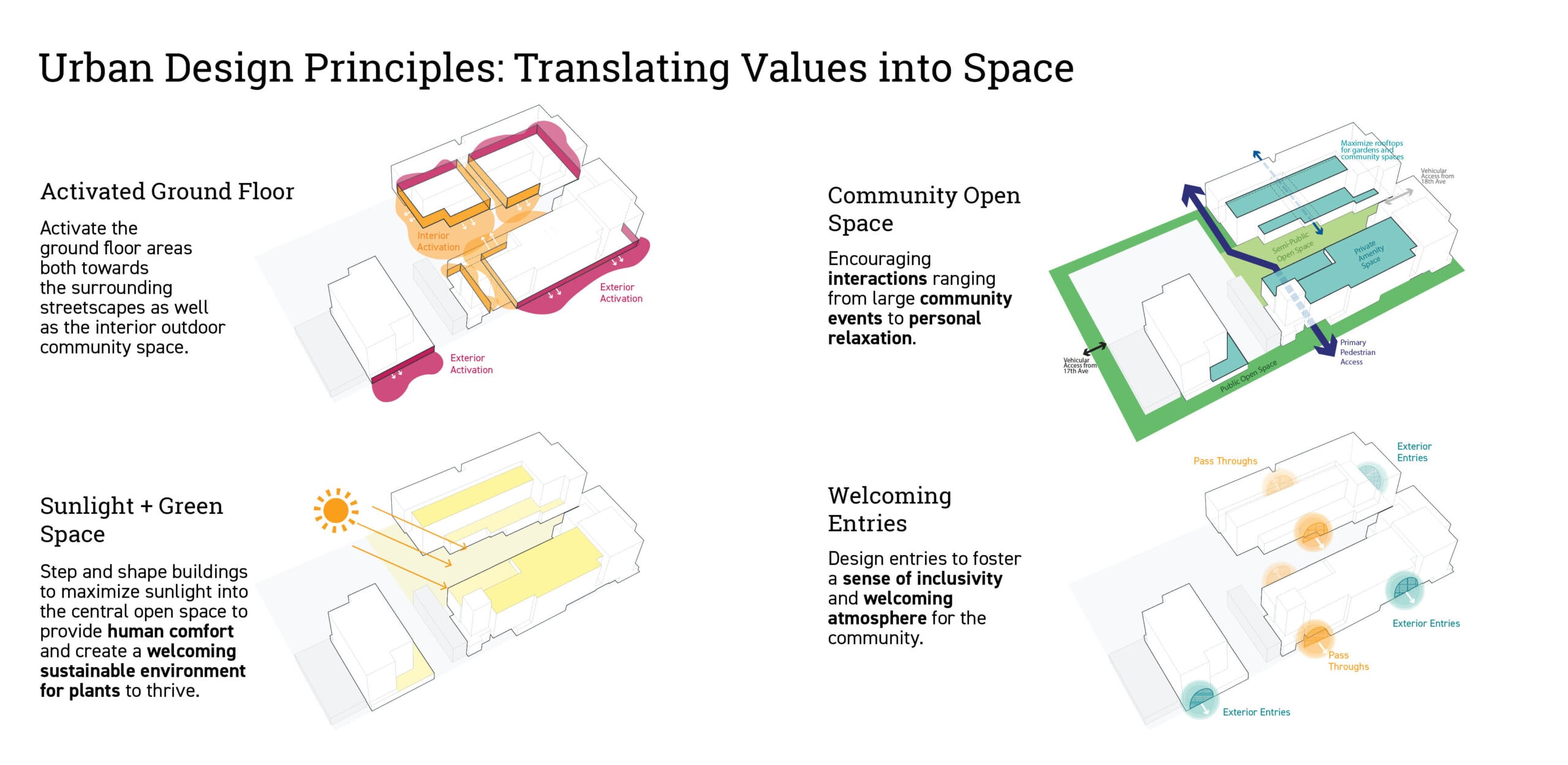
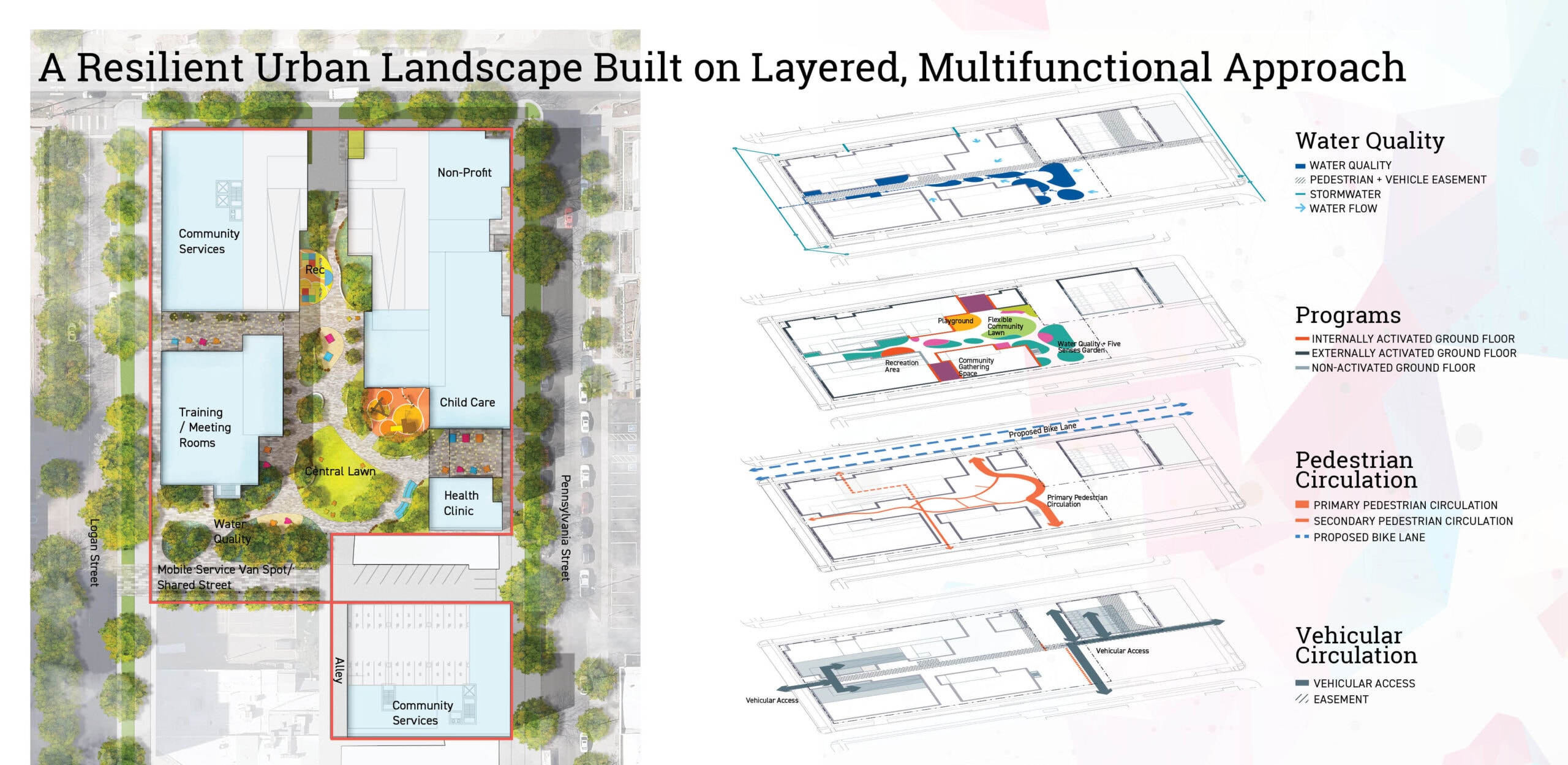
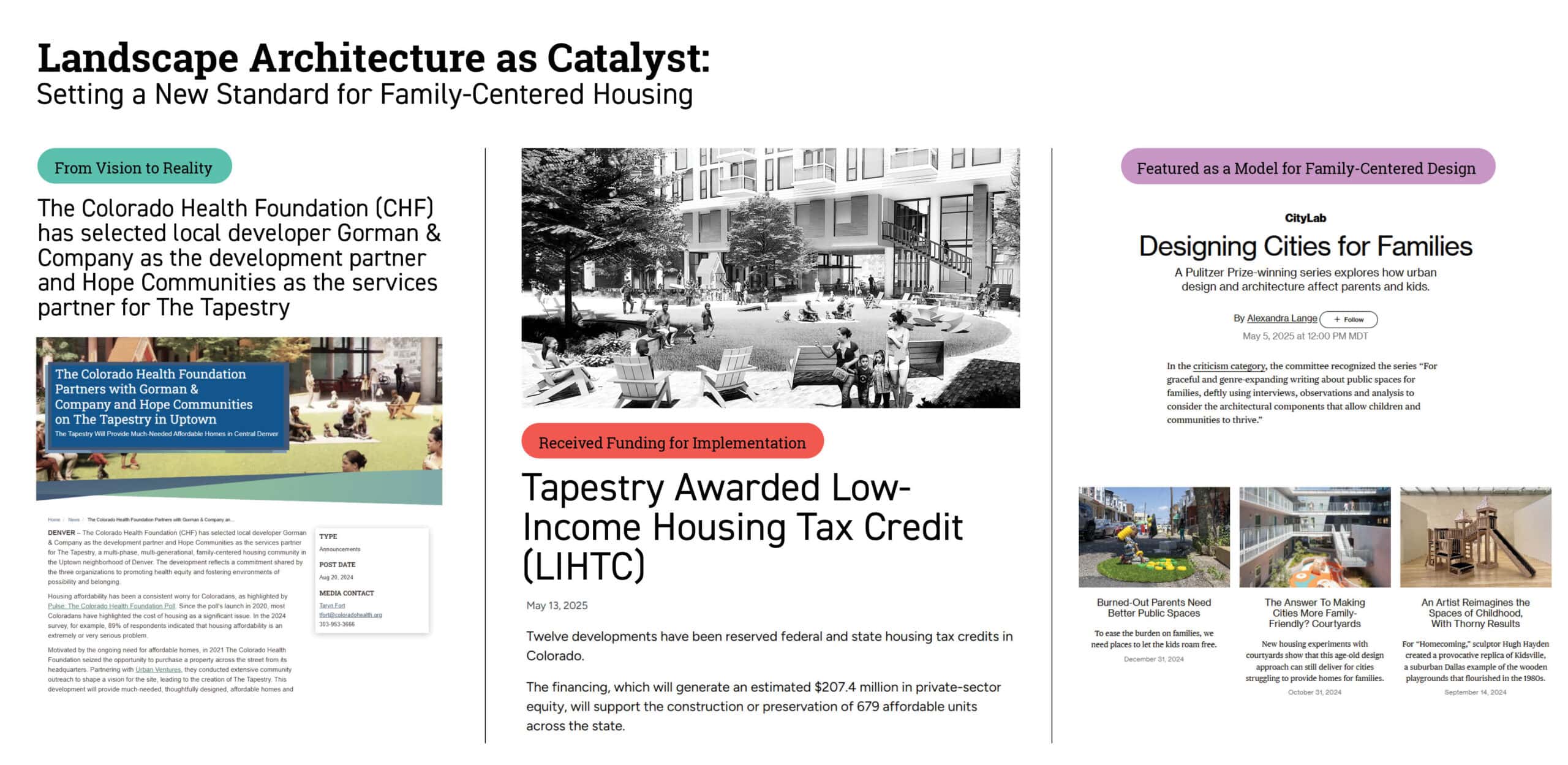
In a bold departure from traditional philanthropy, the Colorado Health Foundation acquired land in a gentrified neighborhood to catalyze a health-focused, affordable housing community, demonstrating how mission-driven ownership can shape equitable, placemaking design. The most significant challenge was the limited space within a dense urban fabric. Working within the tight constraints of a single city block, the landscape architect employed a layered, multifunctional approach to maximize impact. Every square foot was designed to do more. Green infrastructure systems are integrated with shaded areas for play and rest; shared courtyards were designed with embedded informal seating, framed views to Five Senses Garden are designed with seasonally expressive native plants to promote sensory grounding aligned with trauma-informed design for displaced residents. Stormwater gardens located near gathering nodes double as educational tools, featuring native species for educational interpretation and placed to demonstrate seasonal infiltration processes. By layering stormwater systems with shaded play spaces and multi-use gathering areas, the design leverages every square foot to serve overlapping ecological, cultural, and social functions, demonstrating how spatial constraint can sharpen landscape performance.
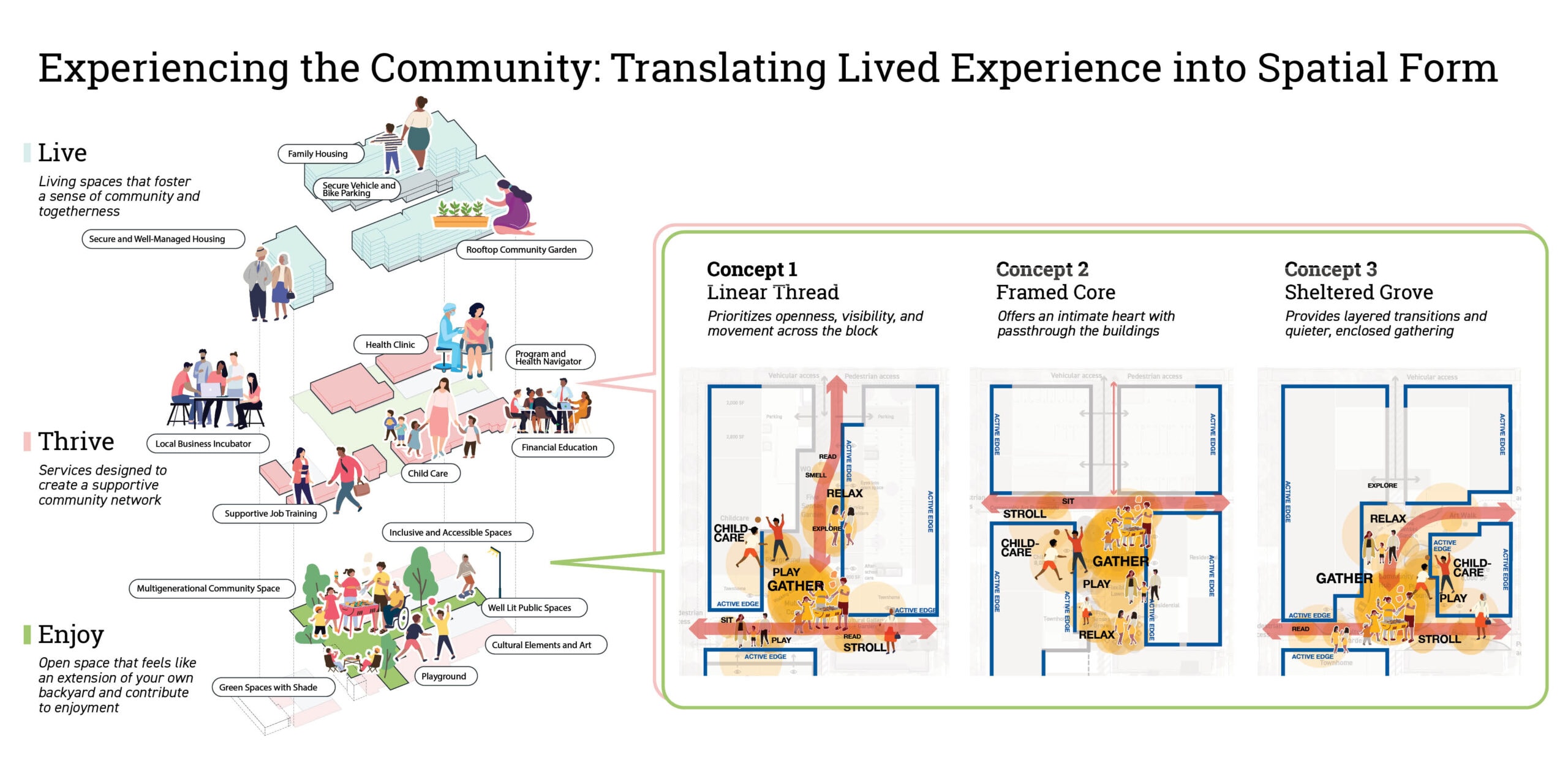
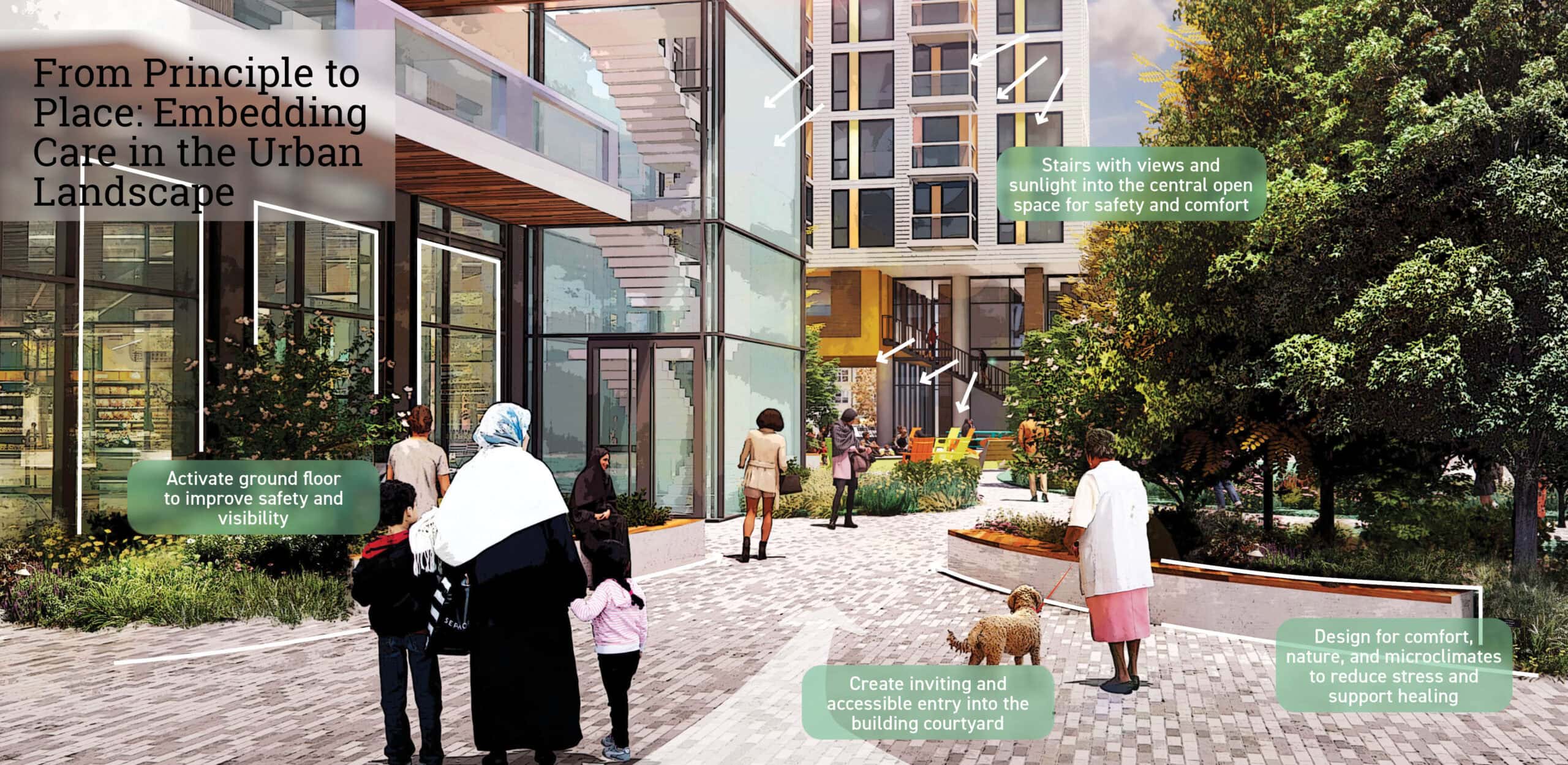
Another challenge was the complexity of needs: the project had to serve families across generations and cultures, many of whom have experienced housing insecurity, displacement, or systemic marginalization. To address this, the landscape architect incorporated trauma-informed design at a community scale, using spatial strategies such as layered thresholds, predictable circulation loops, clear sightlines, and decentralized social nooks. Outdoor environments are designed to support different forms of gathering, from quiet reflection to collective celebration, and to accommodate diverse needs around mobility, caregiving, and safety.
Environmental Sensitivity and Sustainability (Explain strategies and outcomes)
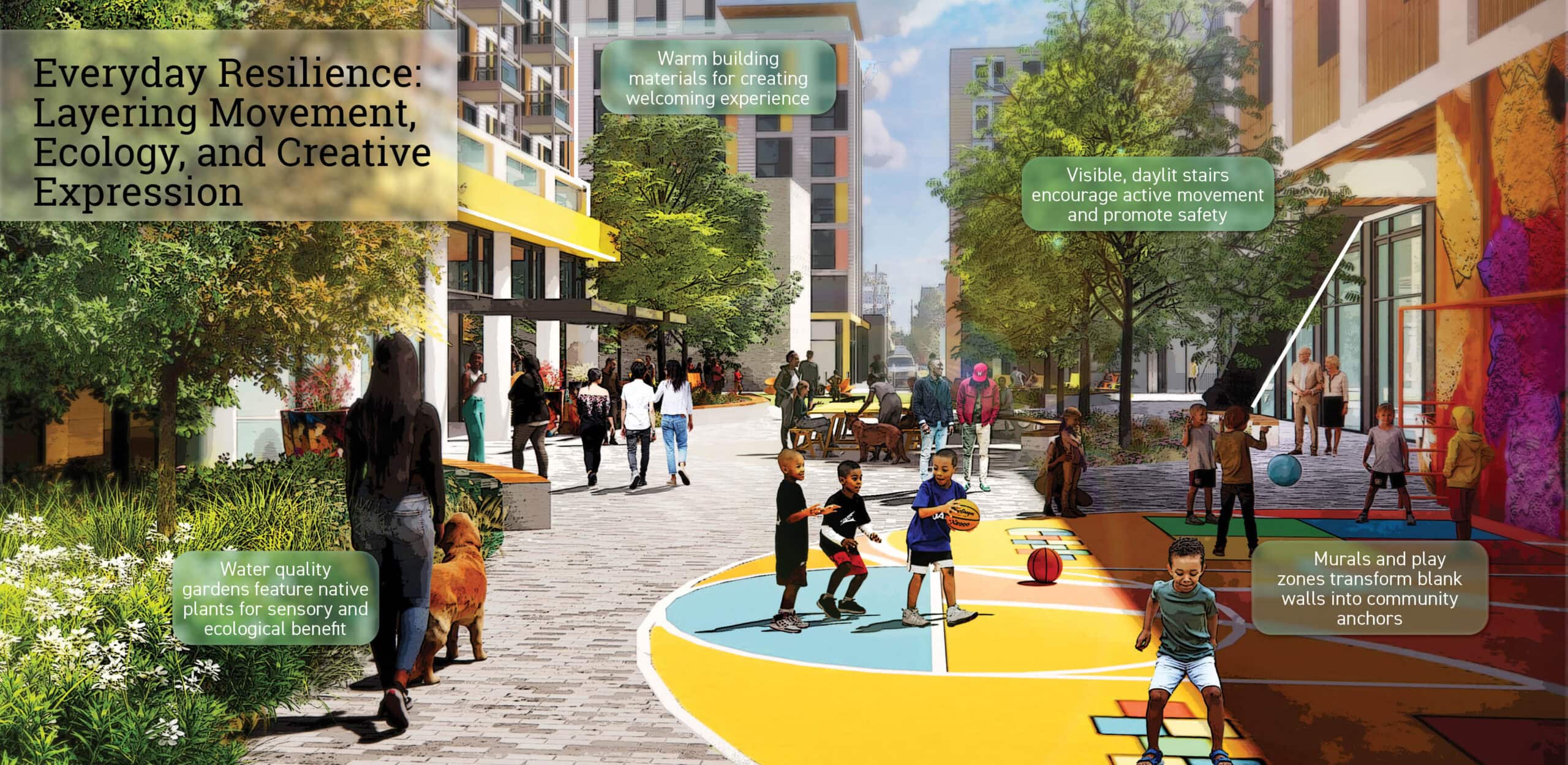
The Tapestry Block Vision Plan embeds environmental sensitivity into the site’s spatial and material systems. A phased network of water quality gardens, integrated with the Five Senses Garden, manages stormwater while offering multisensory, restorative experiences. Planted with native species chosen for texture, scent, and seasonal change, these gardens exceed city water quality requirements and reinforce regional hydrology goals while doubling as contemplative gathering areas.
To reduce urban heat and support year-round outdoor use, the design incorporates layered tree canopy, passive shading, and vegetated buffers around key activity zones. Lawn areas are framed with natural materials, boulders, logs, and planting beds, that provide informal play opportunities while avoiding synthetic surfacing.
The site design removes vehicular access from the central open space and instead prioritizes walking and biking through layered circulation loops, sidewalk extensions, and visible, artful bike parking.
Ground-level building transparency, activated edges, and courtyard-facing balconies enhance safety and social connection. Materials and forms were chosen to be warm, tactile, and culturally resonant—creating a landscape that supports joy through color and planting richness, safety through lighting and visibility, and belonging through co-created elements like murals and message boards.
Significance to the Public and the Profession
This project redefines the role of landscape architecture in shaping equitable cities. It demonstrates how, even with limited budget, the landscape architecture can be foundational in advancing public health, social justice, and community development. Rather than being an afterthought or aesthetic add-on, the landscape in this project is foundational—shaping identity, behavior, and opportunity.
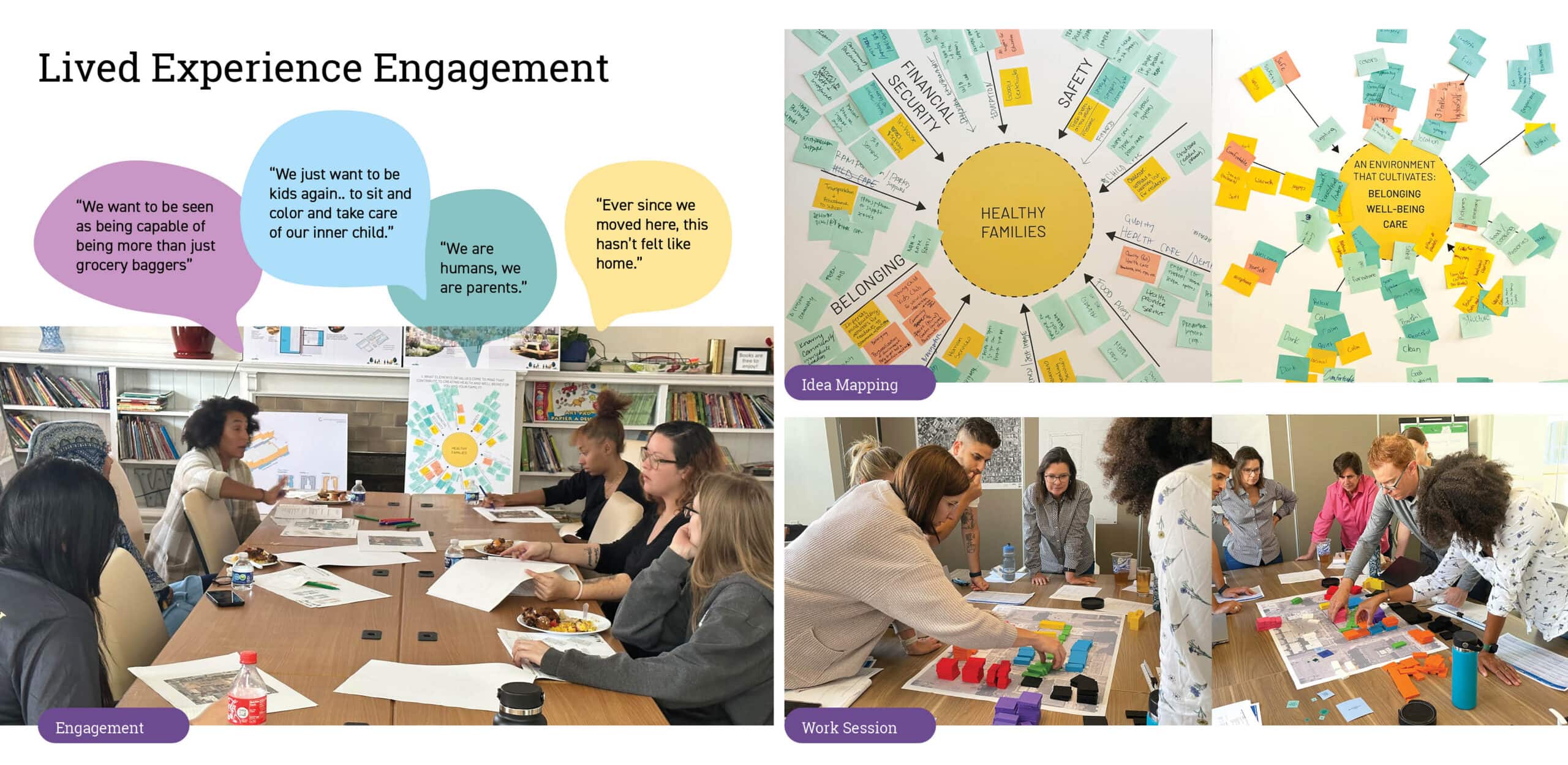
For the general public, especially families historically excluded from the urban core, this plan provides visibility, safety, and a sense of belonging. It counters the homogeneity of market-rate development, demonstrating what it means to design with communities rather than for them. Through direct engagement with future residents and service providers, the design team translated lived priorities into spatial strategies, such as a playground secured during childcare hours, community bulletin boards for shared storytelling and cultural expression, and a range of gathering typologies, from small, shaded alcoves for one-on-one connection to larger, flexible lawns that support informal play and cultural events.
For the profession, the Tapestry Block Vision Plan stretches the boundaries of practice. It integrates trauma-informed planning, service-enriched housing, and landscape-driven placemaking in a single framework. It demonstrates that landscape architects can lead systems integration, bridging social programming with spatial planning, and designing multifunctional landscapes that mediate microclimate, support restoration and gathering, and empower user agency through spatial flexibility and sensory engagement.
By working across sectors and centering lived experience, the landscape architect helped create a model that can be adapted in other cities facing similar affordability and equity challenges. This project reframes the role of the landscape architect, from shaping parks and plazas to structuring inclusive civic life. It offers a replicable toolkit for integrating health equity, cultural programming, and climate resilience into the spatial language of housing. It reminds us that, even on a small budget, landscape architecture has the power to make a big, lasting impact.
Diversity, Equity, and Inclusion Project Features
The Tapestry Block Vision Plan centers diversity, equity, and inclusion through trauma-informed, service-enriched placemaking design that reflects the lived experiences of multigenerational, culturally diverse families who have faced displacement and housing insecurity. The site fosters inclusion through accessible, flexible spaces that accommodate varying abilities, caregiving needs, and cultural practices, from shaded play zones and sensory gardens to secure childcare areas, co-created murals, and gathering spaces that support both reflection and celebration. Design strategies such as clear sightlines, layered thresholds, variety of seating, and inclusive circulation loops enhance safety, choice, and belonging—especially for historically marginalized communities. The planning process itself prioritized diversity, equity, and inclusion by embedding community voices and service providers throughout, ensuring the resulting landscape affirms identity, builds connection, and promotes equity in access to nature, wellness, and opportunity.
The Tapestry Block Vision Plan integrates trauma-informed and culturally responsive design with green infrastructure, safe mobility, and inclusive outdoor spaces creating a model that addresses social determinants of health within a dense urban context.
Team Members
Client
- The Colorado Health Foundation
Planning, Urban Design
- Livable Cities Studio (prime)
Development Representative
- Urban Ventures
Civil Engineer
- Aschermann Consulting, LLC
Architect
- Bosk, LLC
Equity Framework Consultant
- Equity Policy Solutions
Sustainability Consultant
- Group14 Engineering, PBC
Lived Experience Engagement
- The 5WH, LLC
Documents and Media
Planning Docs (if applicable):