
Branching Generations: San Antonio Arboretum Master Plan
- Award Year: 2025
- Award Category: Analysis and Planning
- Award Designation: President's Award of Excellence
- Client: Arboretum San Antonio
- Location: San Antonio, TX
- Photography credit: Images courtesy of Sasaki
Summary
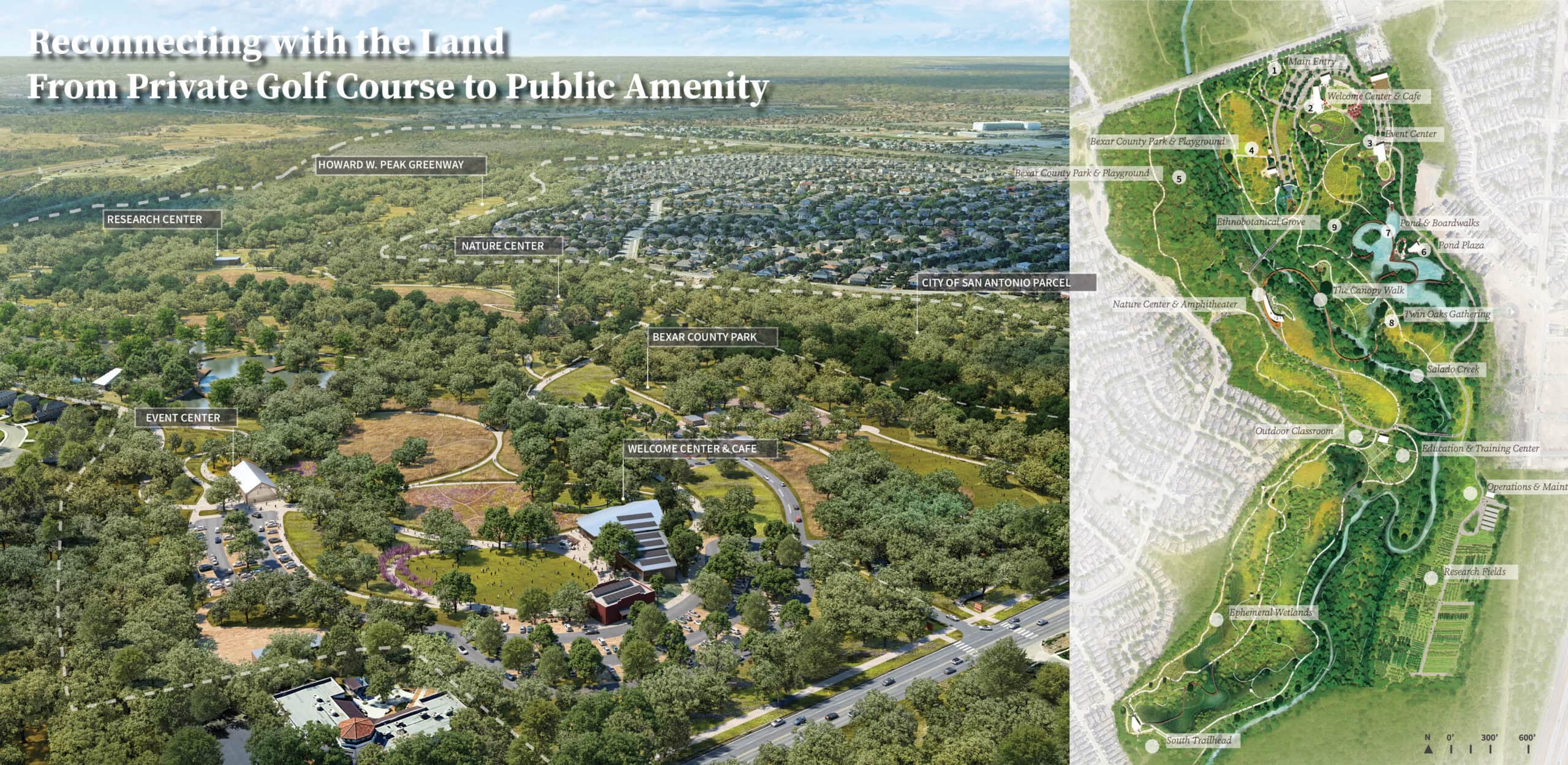
The San Antonio Arboretum Master Plan envisions a 230-acre living museum of trees rooted in the ecology, culture, and heritage of South Texas. Located on San Antonio’s Southeast Side, the Arboretum transforms a former private golf course into a free and immersive, restored landscape that reconnects people to stories and benefits of trees.
The planning process integrated rigorous site analysis, Indigenous and cultural research, and multilingual community engagement to inform a multi-pronged Master Plan. It includes a strategic plan, business plan, site design, ecological management plan, and operations and maintenance plan, setting the stage for holistic implementation. The design restores 13 native habitat types, enhances the Salado Creek corridor, and proposes climate-resilient planting strategies. The Arboretum includes botanical collections, education spaces, contemplative trails, and culturally responsive programming, serving as a public amenity and platform for environmental equity.
This project is award-worthy for its equity-driven approach to landscape planning, deep response to site and region, and innovative model of community-centered design. It exemplifies how thoughtful planning can shape inclusive, ecologically meaningful spaces for generations to come.
Narrative
Arboretum San Antonio is a visionary project that will transform a former private golf course into one of Texas’s largest public gardens and arboreta. Located on more than 230 acres on the city’s southeast side, the initiative is a collaboration between the City of San Antonio, Bexar County, and a dedicated nonprofit partner. Designed as a vibrant, accessible “museum of trees,” the Arboretum will provide opportunities for education, community gathering, and ecological stewardship, all while celebrating the region’s rich natural and cultural heritage. The design process produced a comprehensive Strategic Plan, Site Plan, Business Model, Ecological Restoration Plan, and Operations and Management Plan to guide implementation.
Interpreting Texan Ecologies
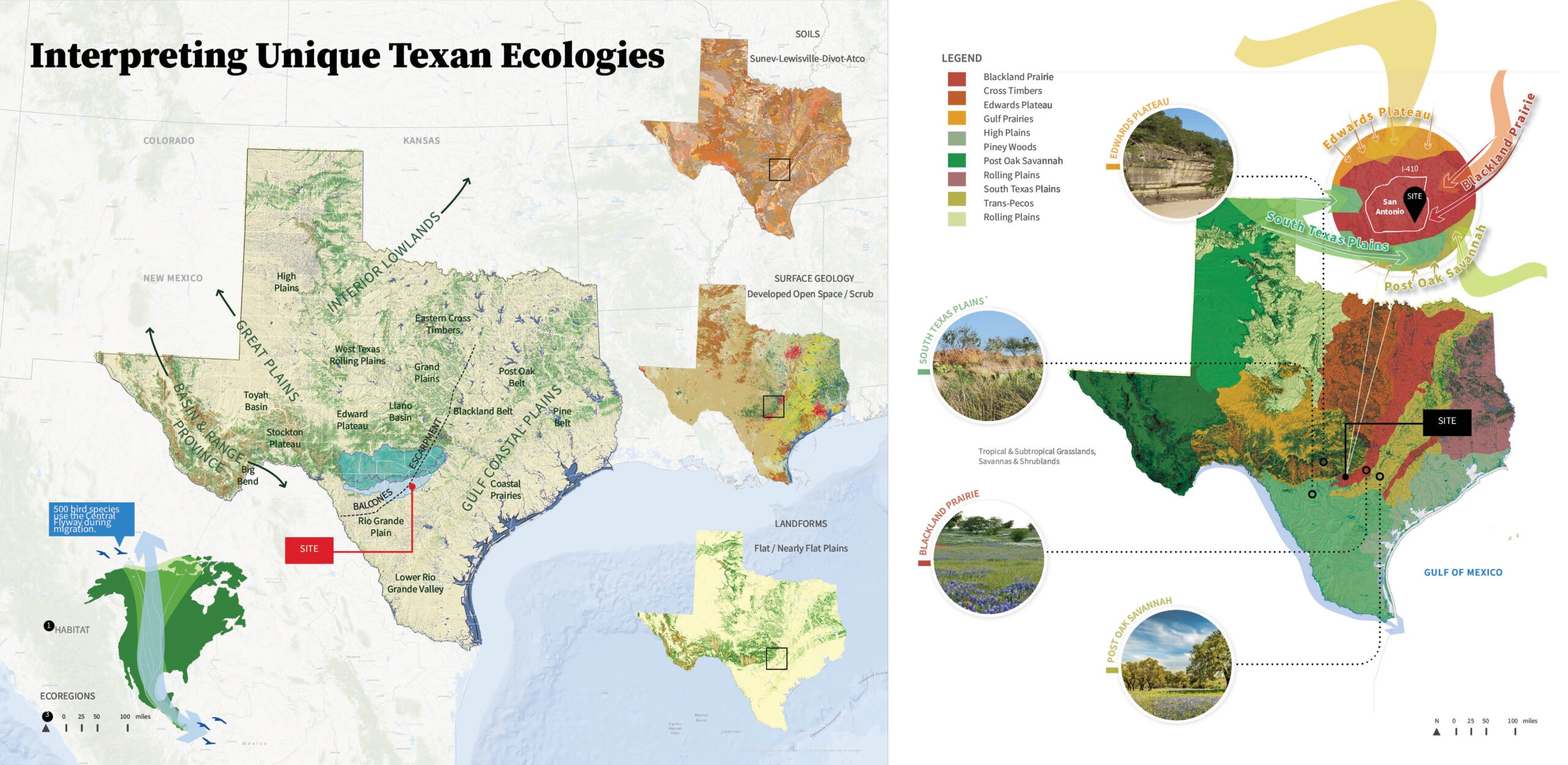
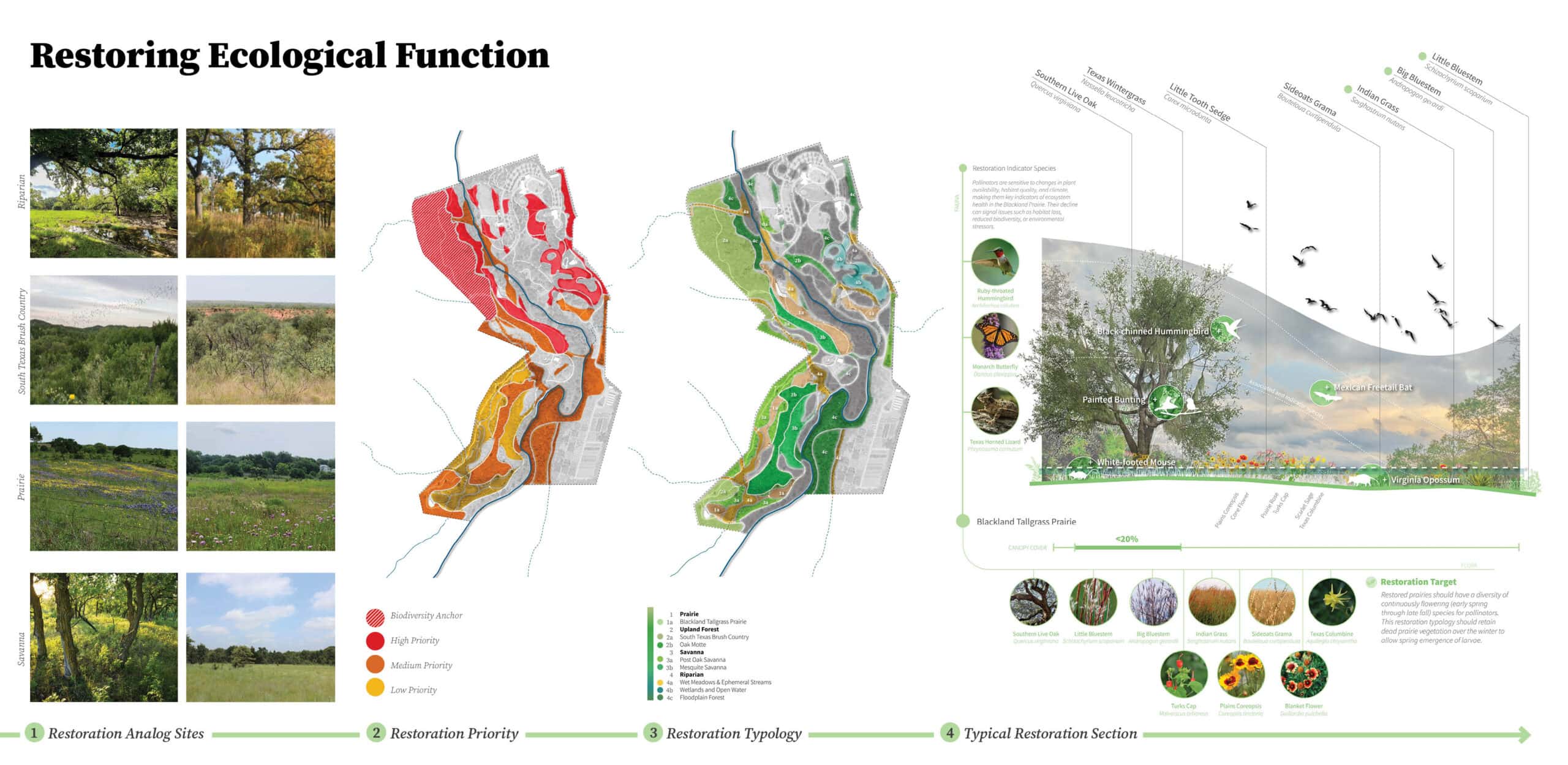
The Arboretum’s design is shaped by the site’s unique ecological location—straddling the Balcones Escarpment Fault Line and within the Edwards Aquifer—it sits at the intersection of multiple ecoregions, making it a prime location to showcase Texas’s ecological diversity. Open fairways and remnant forests are reminders of the Blackland Prairie’s deep, fertile soils and the open landscape of the Post Oak Savannah. Through rigorous GIS analysis and field surveys, the design team documented existing flora and fauna, mapped historic habitat types, and identified critical features such as red harvester ant colonies—an indicator of healthy, undisturbed soils.
Creating Equitable Green Space
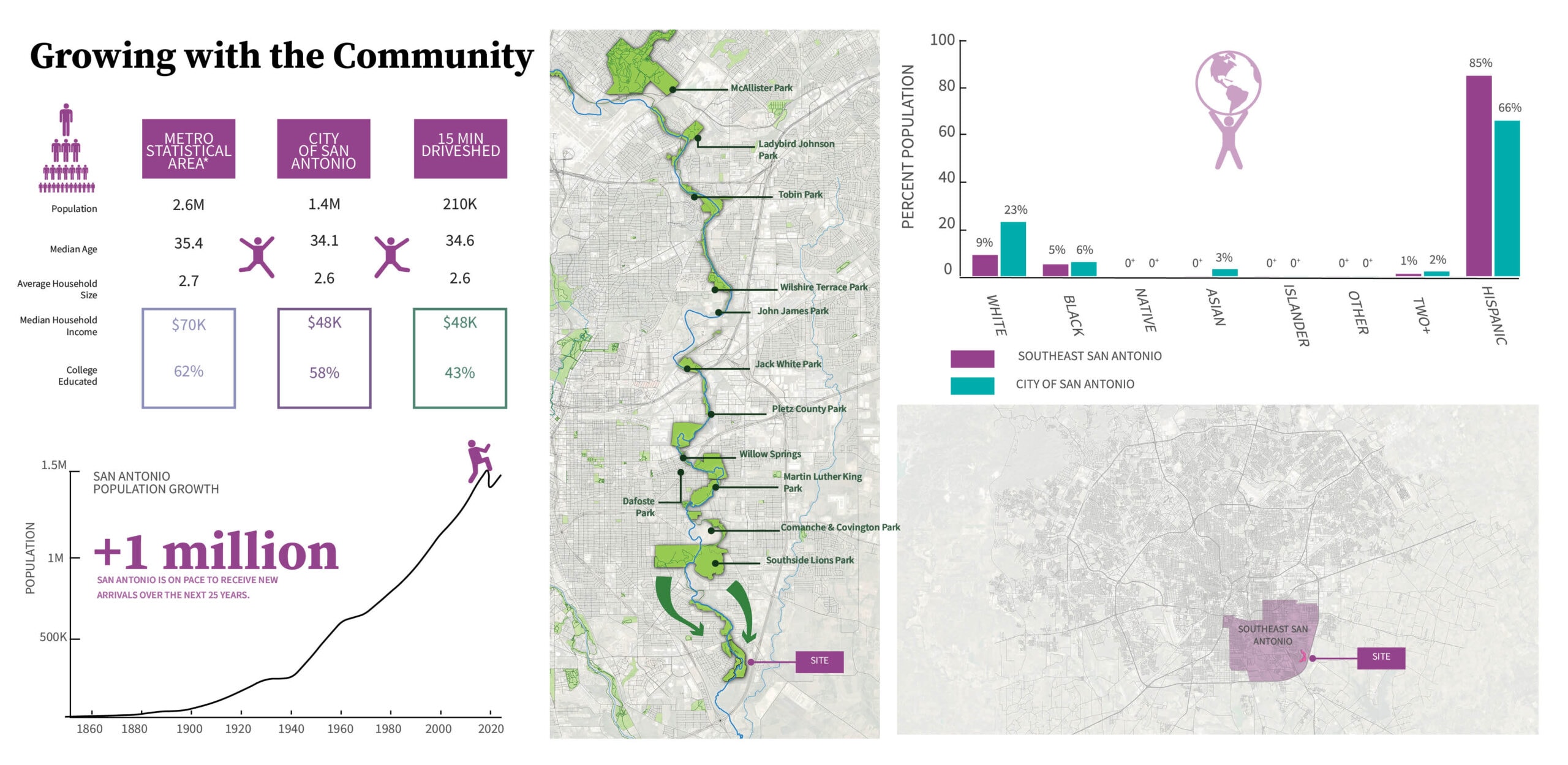
San Antonio is ranked as the seventh-largest rapidly growing city in the United States, with a population exceeding 1.4 million. As the city grows, so does the need to preserve green space for ecosystem services and nature education. The Arboretum addresses this need, especially for historically underserved neighborhoods in southeast San Antonio, many of which are predominantly Hispanic and lack equitable access to high-quality parks. The site’s integration into the broader Howard W. Peak Greenway system will connect over 25 miles of parks along Salado Creek, increasing bike access to high-quality, free green spaces across San Antonio.
A Heat Refuge in a Changing Climate
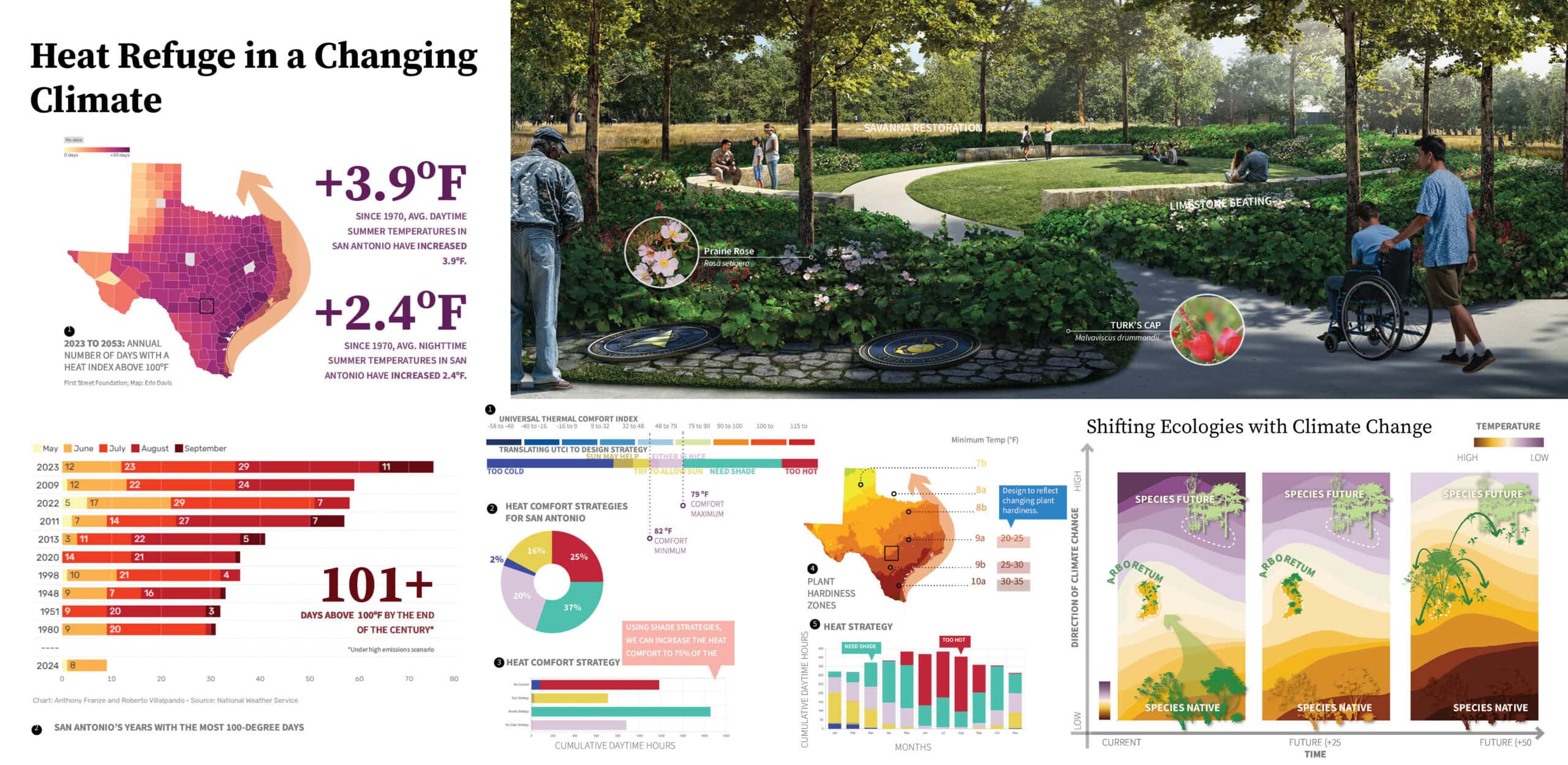
South Texas is already experiencing the effects of climate change, including higher average temperatures, prolonged droughts, and more frequent extreme heat events. Since 1970, San Antonio’s average summer daytime temperatures have increased by nearly 4°F. Projections suggest that by the end of the century, the city may face more than 100 days a year with temperatures over 100°F.
The Arboretum is designed as a vital urban heat refuge. Using a Universal Thermal Climate Index (UTCI) model, the plan incorporates multiple cooling strategies, including shaded areas beneath mature trees, interactive water features, low-albedo materials, shaded pavilions, and indoor climate-controlled spaces. These features will provide essential cooling and climate resilience for nearby communities.
Community-Centered Design
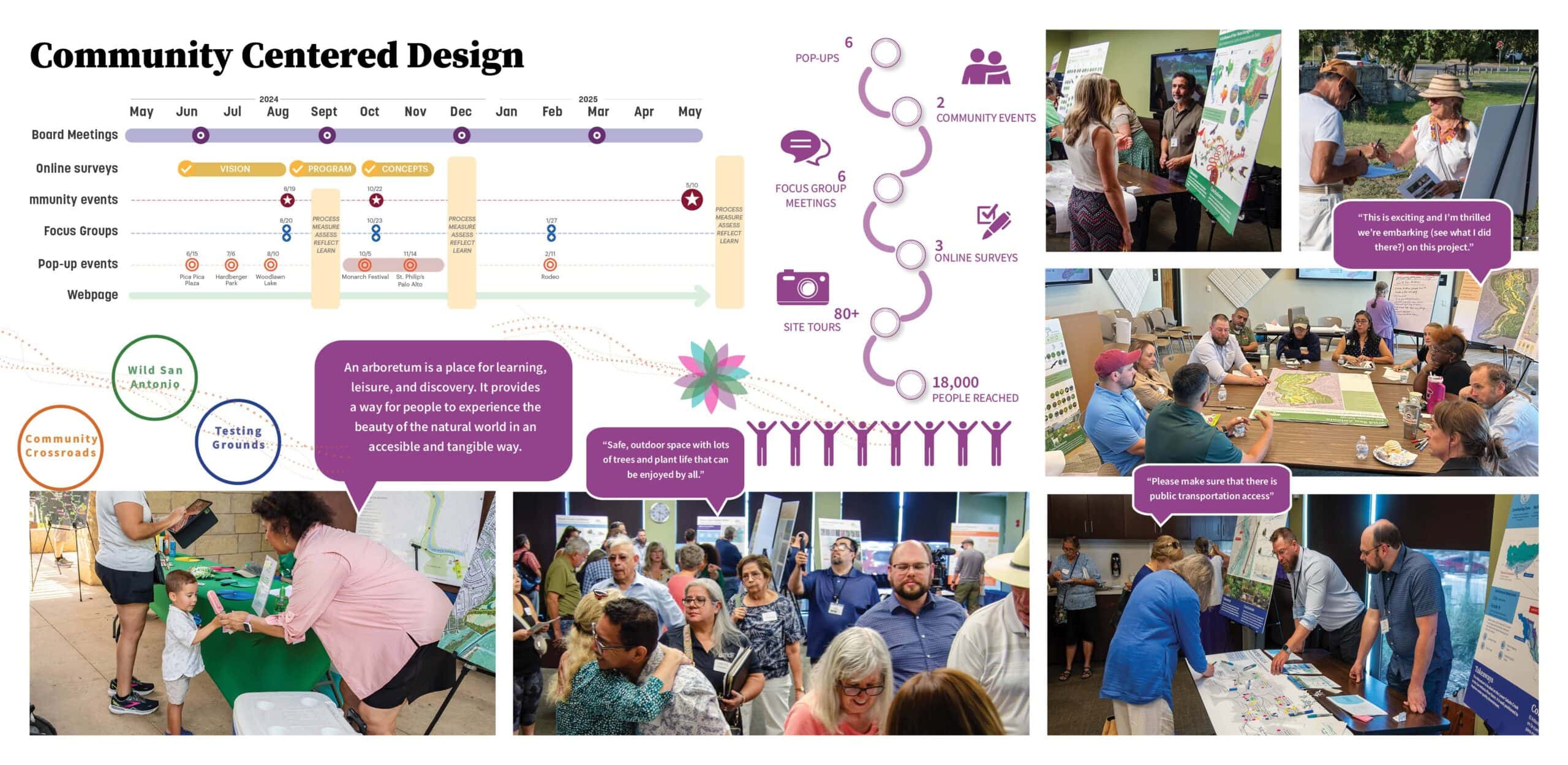
Community engagement has shaped the Arboretum’s development. The planning team used a variety of outreach methods to gather input from residents and stakeholders, adjusting techniques to ensure demographic representation of southeast San Antonio. Three large community events were held at key milestones, which allowed attendees of all ages to share their preferences for the site’s design, including highlighting indigenous history, water stewardship, and a desire for a canopy walk. Four multilingual online surveys collected feedback on community aspirations and design concepts, with “Wild San Antonio’s” nature-based experiences receiving the most votes. Six pop-up events reached people across the city and gathered additional input. Two focus groups composed of community leaders with expertise in the environment and local culture met five times to provide detailed feedback on implementation and partnerships. Printed, televised, and website news articles highlighting the design steps helped drive participation and interest. In total, over 18,000 people were engaged, ensuring that the Arboretum reflects the community’s needs and aspirations.
Honoring Indigenous Histories
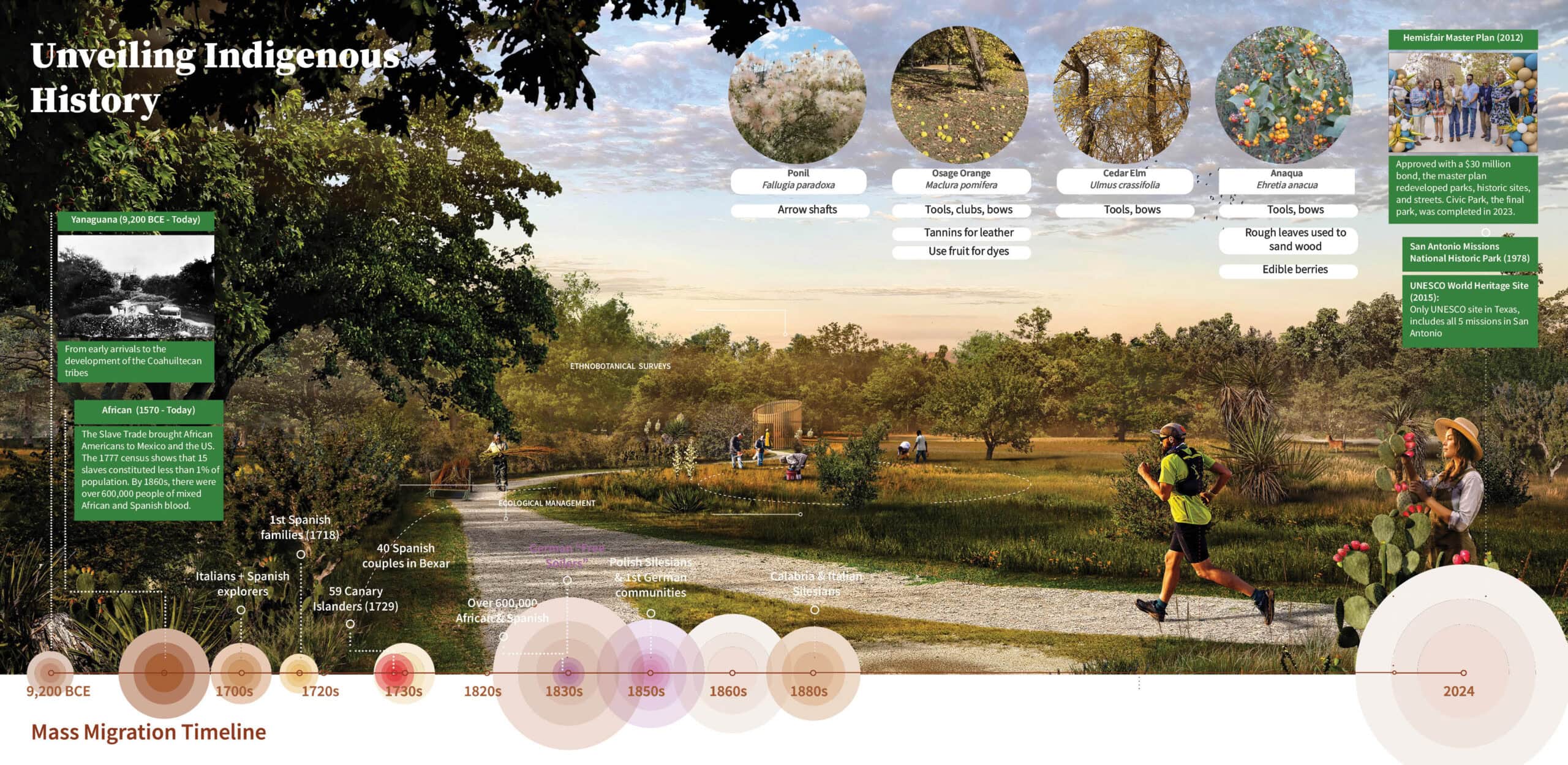
Cultural heritage—particularly Indigenous histories—is a core element of the Arboretum prioritized by community input. The area is known as ‘Yanaguana’ by Coahuiltecan-speaking peoples, who long used the region’s waterways for travel, trade, and settlement. The site contains Paleo-Indian archaeological features and a historical battle marker, informing both preservation efforts and interpretive programming.
Tree and plant collections were curated in partnership with Indigenous experts to highlight traditional ecological knowledge. Native plants that provided food, medicine, shelter, and ceremonial materials are celebrated throughout the landscape. Interpretive elements will share these stories and explore reciprocal relationships between people and the land.
Ecological Restoration as a Core Mission
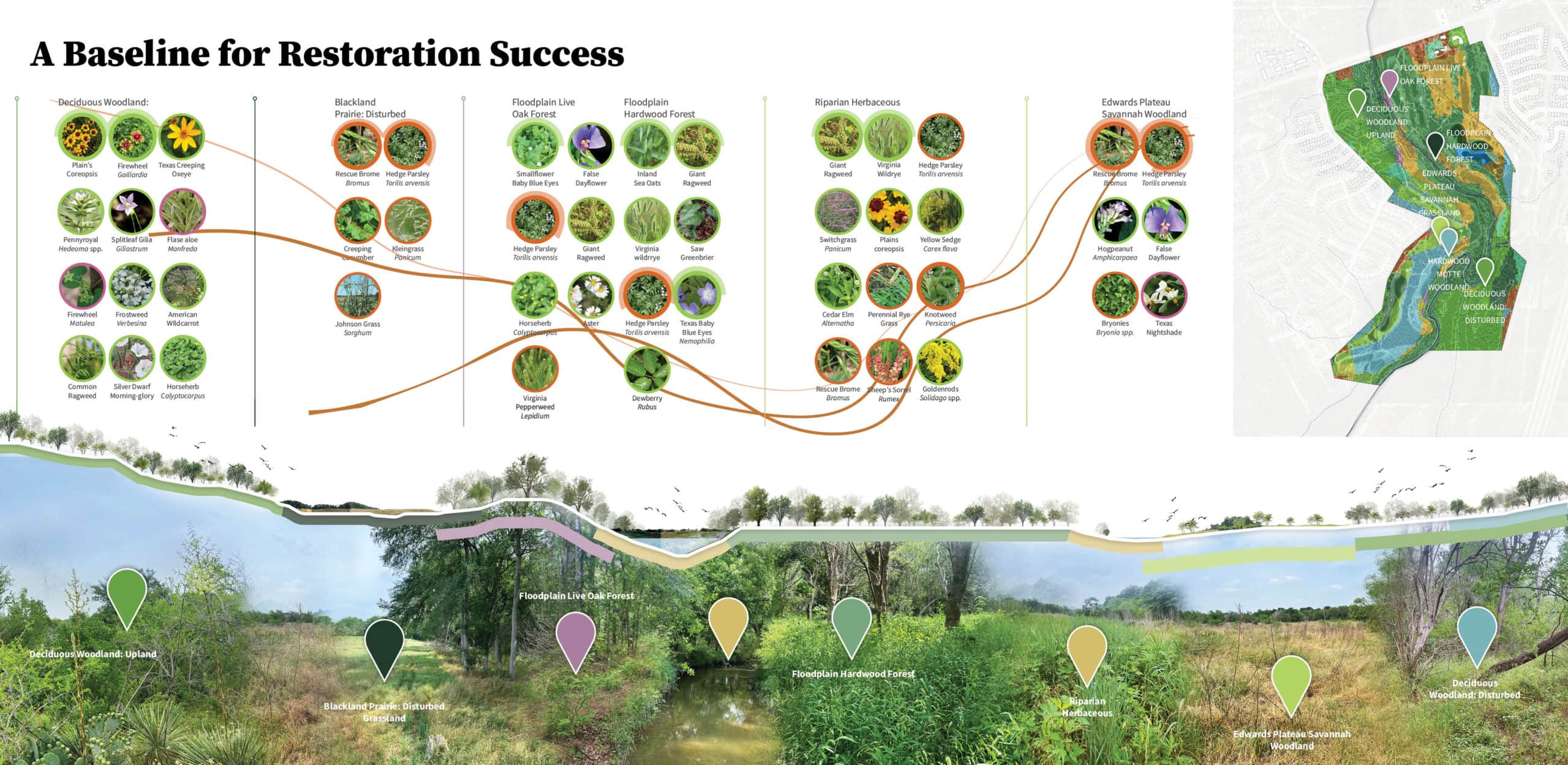
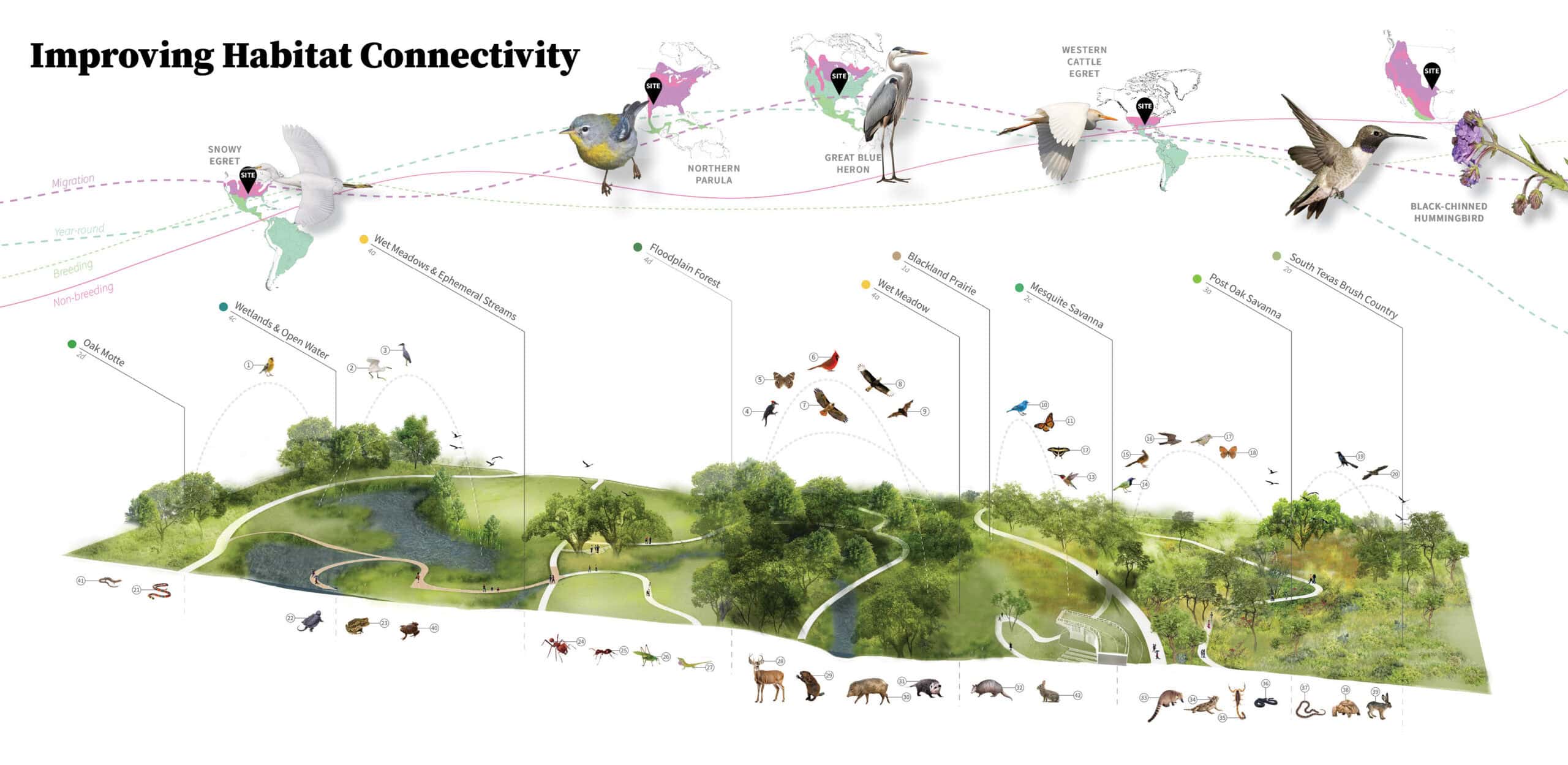
Restoration and land stewardship are fundamental to the Arboretum’s mission and to interpreting and preserving the region’s rich biodiversity. Historically, the site supported fourteen habitat types, due to the convergence of four ecoregions. These are well represented in riparian, upland, and transitional landscapes found across the Arboretum. Despite decades of agricultural and golf course use, the presence of historical habitat types, historic trees, and a re-emerging seed bank suggests strong potential for restoration. Through floral survey transects, the team identified remnant plant species, creating a baseline that will be used in post-occupancy studies and citizen science research to measure restoration success. An Ecological Management Plan outlines strategies to support biodiversity, strengthen inter-species food webs, and manage invasive tree species. Management options also address local and indigenous practices to restore native plant and animal communities that have been impacted by feral hogs.
Designing with Water
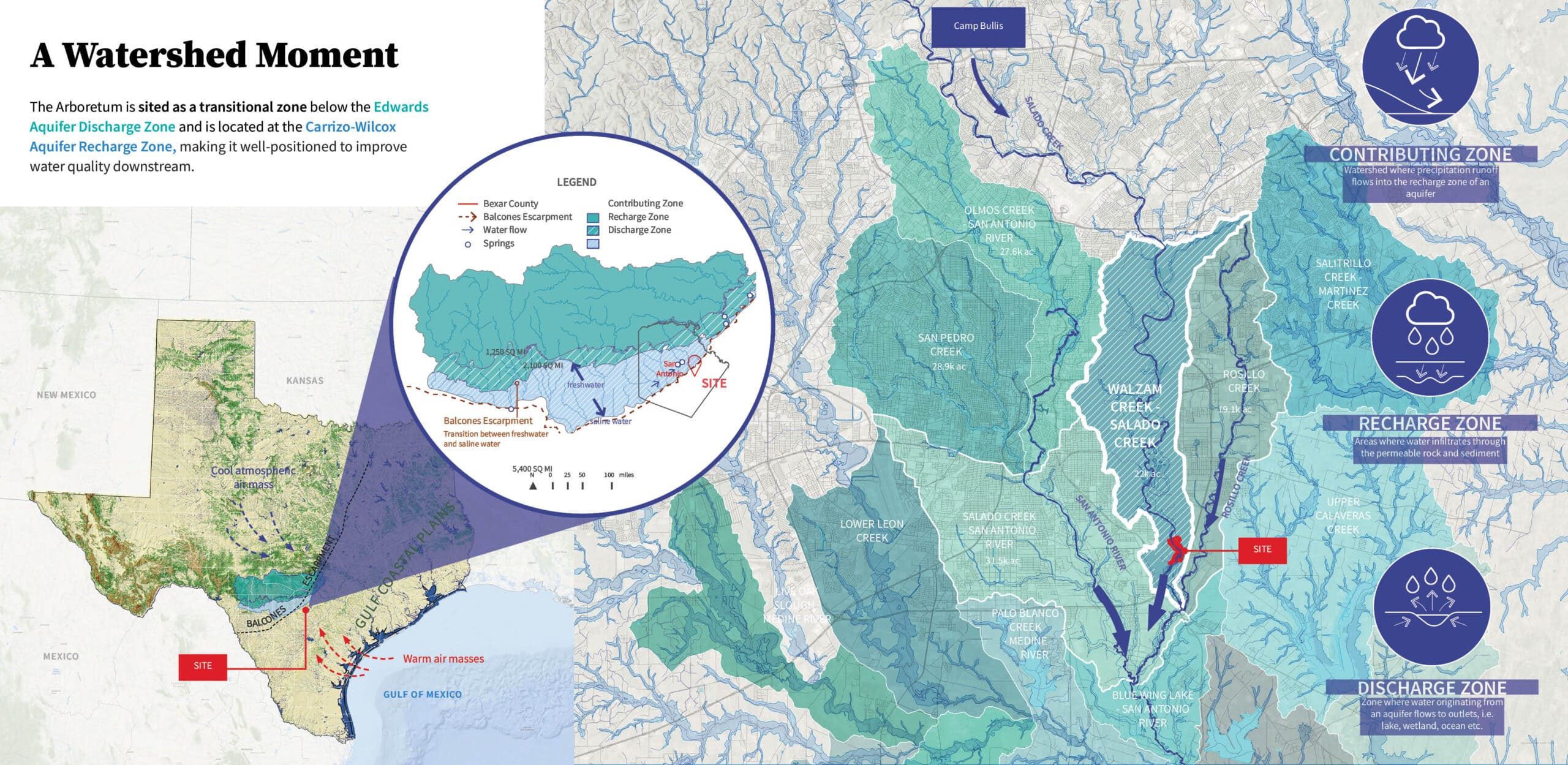
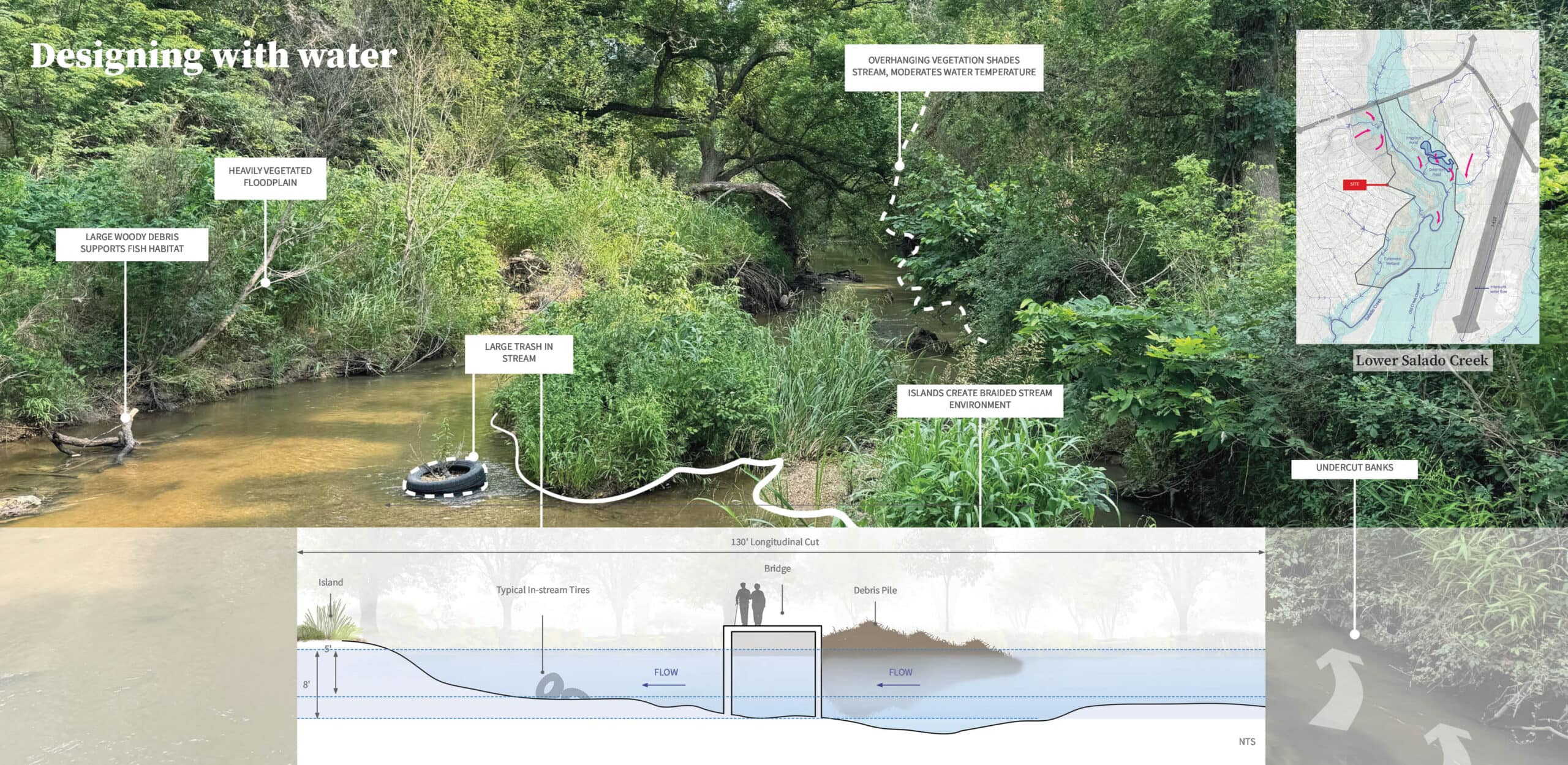
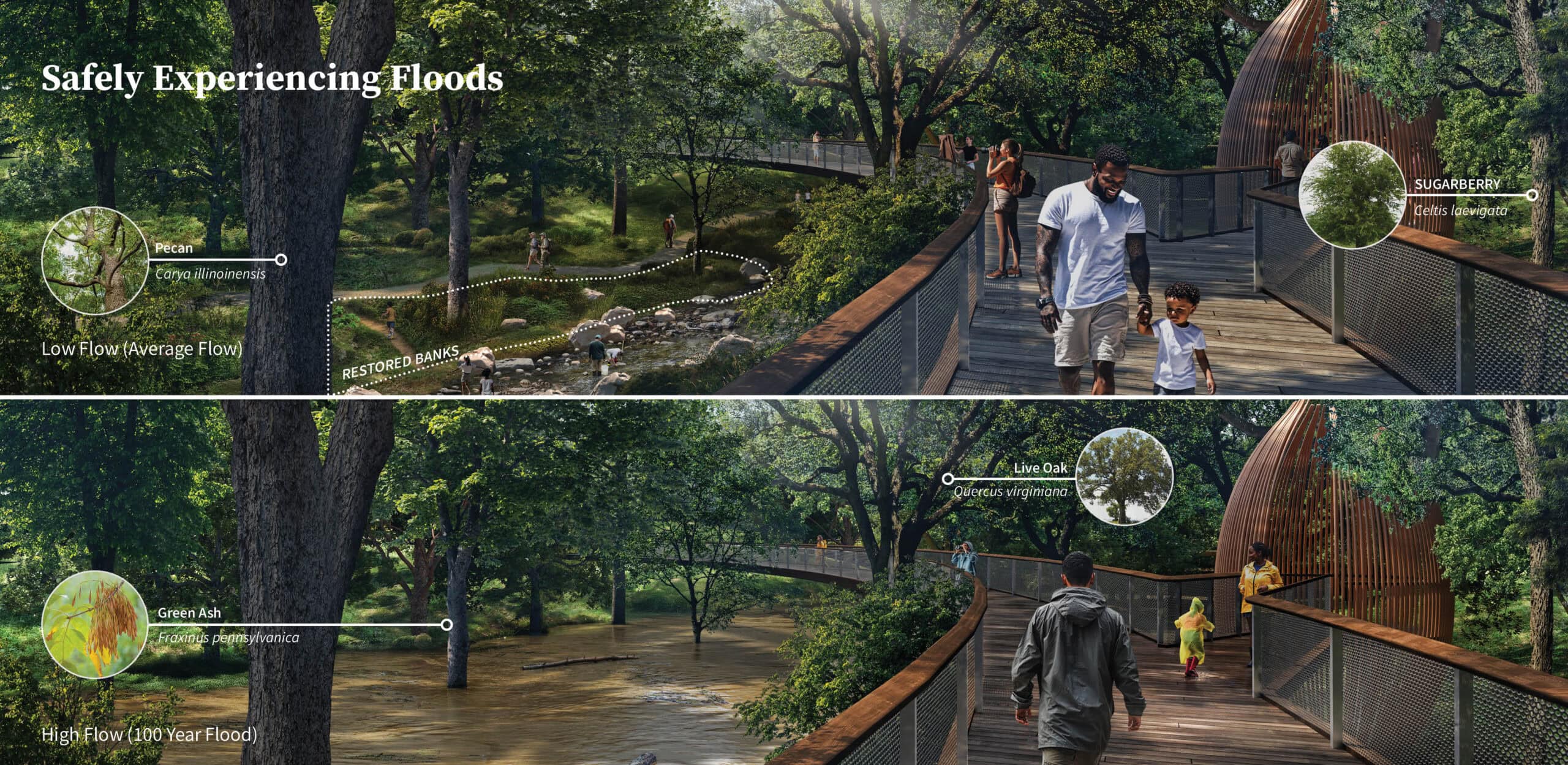
Water systems play a major role in the Arboretum’s function and design. More than 80% of the site lies within the 100- and 500-year floodplain of Salado Creek. This geography allows the Arboretum to act as a natural stormwater filter for nearby neighborhoods and commercial zones. The floodplain and 1.5-mile stretch of Salado Creek were meticulously studied in partnership with the San Antonio River Association to assess erosion, sedimentation, and debris collection. With up to 35’ elevation in creek crests, analysis and flood safety informed the location of trails and buildings, and led to the design of the community-favorite Canopy Walk–a safe, elevated and accessible path through flood-prone areas, offering unique views of mature creekside trees.
Stormwater best practices are integrated throughout the site, including bioswales, cisterns, and green roofs. A reimagined irrigation pond, fed by recycled water, has been expanded and linked with a wetland basin to create a larger system for filtration, detention, and irrigation reuse. Nearly one mile of restored tributaries feed into Salado Creek, with restored banks and newly formed wetlands supporting riparian biodiversity and groundwater recharge. These features improve water quality and also provide unique wetland experiences for visitors, showcasing plants and migrating waterfowl.
A Museum of Trees
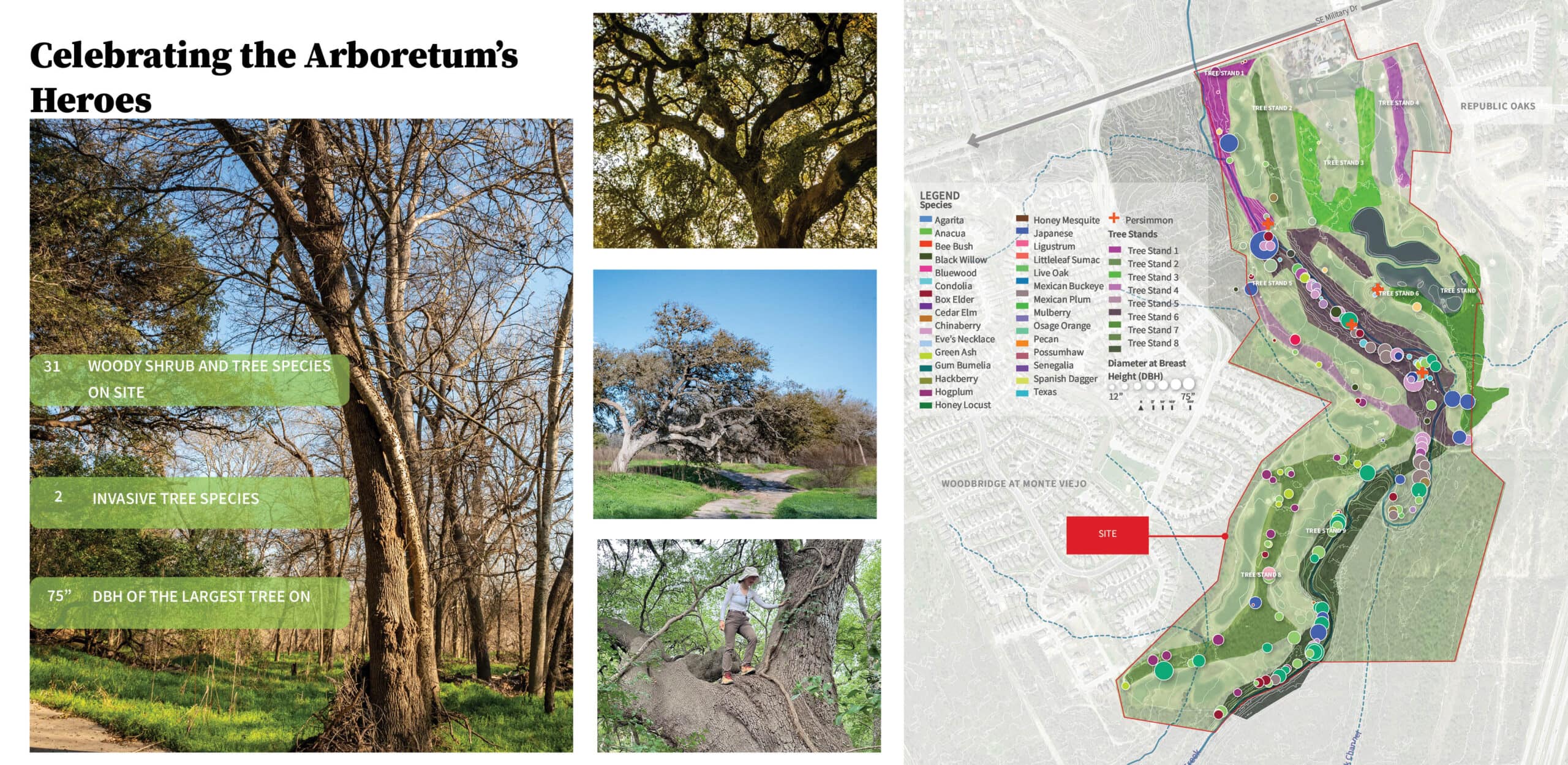
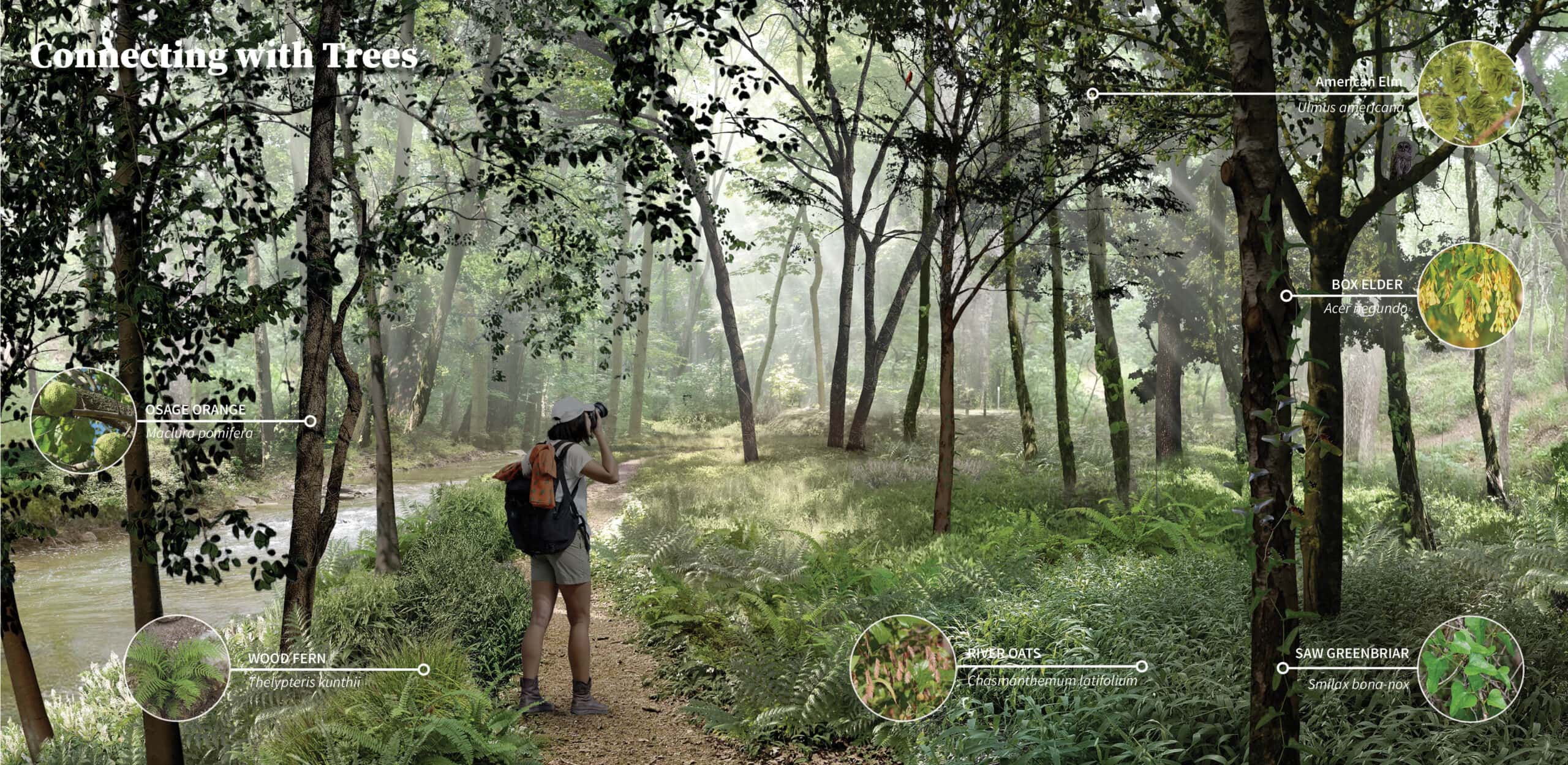
A defining feature of the Arboretum is its collection of “hero trees”—majestic specimens that have grown for a century or more. These include live oaks, cedar elms, green ash, pecan, and Texas persimmon, many of which are in the 90th percentile for size and age. Over 70% of the site is forested, and trails are designed to highlight these trees while minimizing disturbance to their root zones. These living monuments embody the cultural and ecological history of San Antonio and serve as focal points for education.
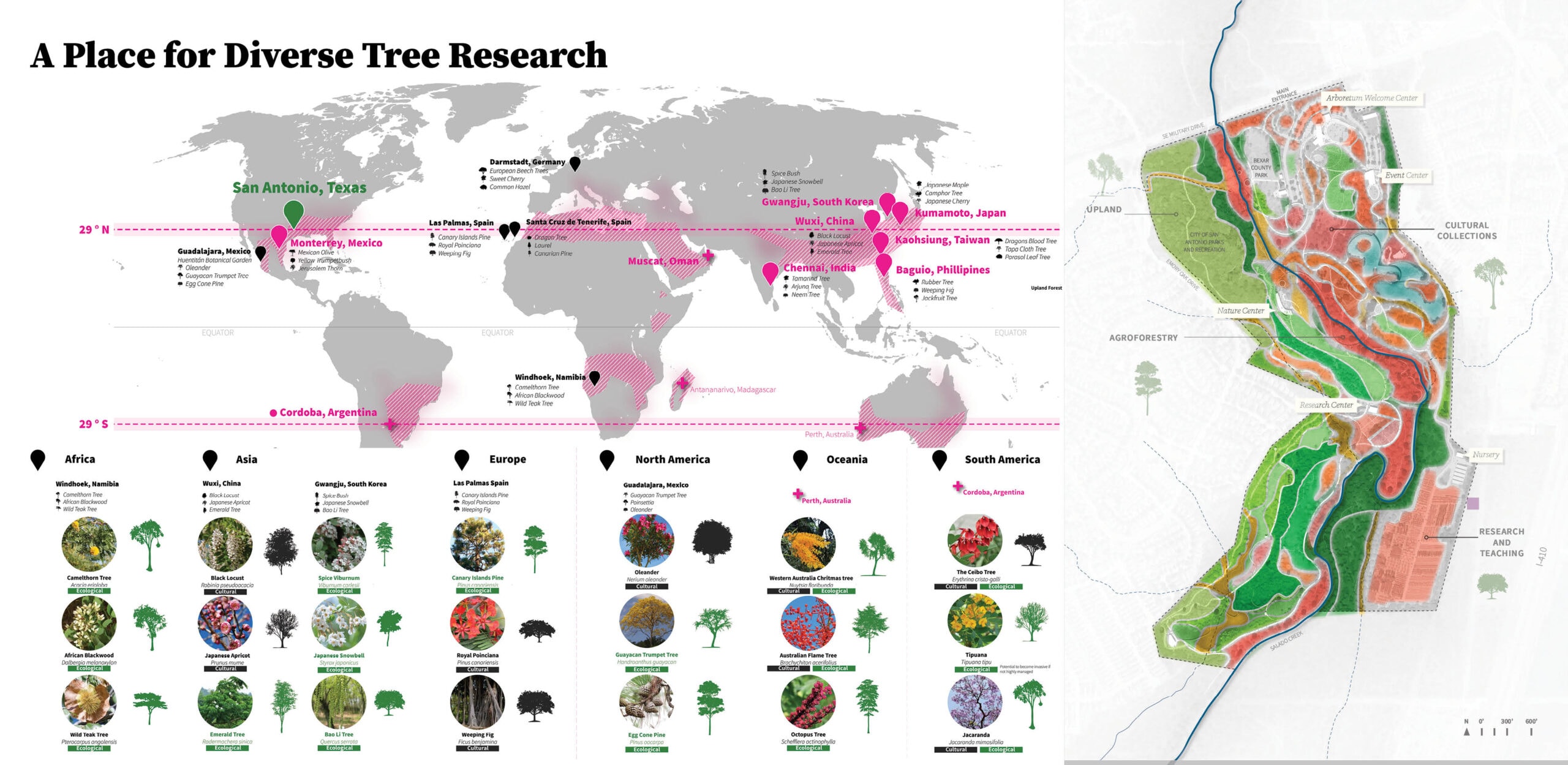
Looking forward, the Arboretum will showcase over 150 native and adapted tree and shrub species that make up San Antonio’s diverse urban forest. A long-term goal is to achieve Level III Arboretum Certification, requiring documentation of over 500 species. The San Antonio 2100 Collection focuses on heat- and drought-resistant species suited for future climate conditions. The Phytogeographic Sister Cities Collection honors San Antonio’s global connections by including tree species of cultural or ecological significance from its sister cities.
Designing for Implementation
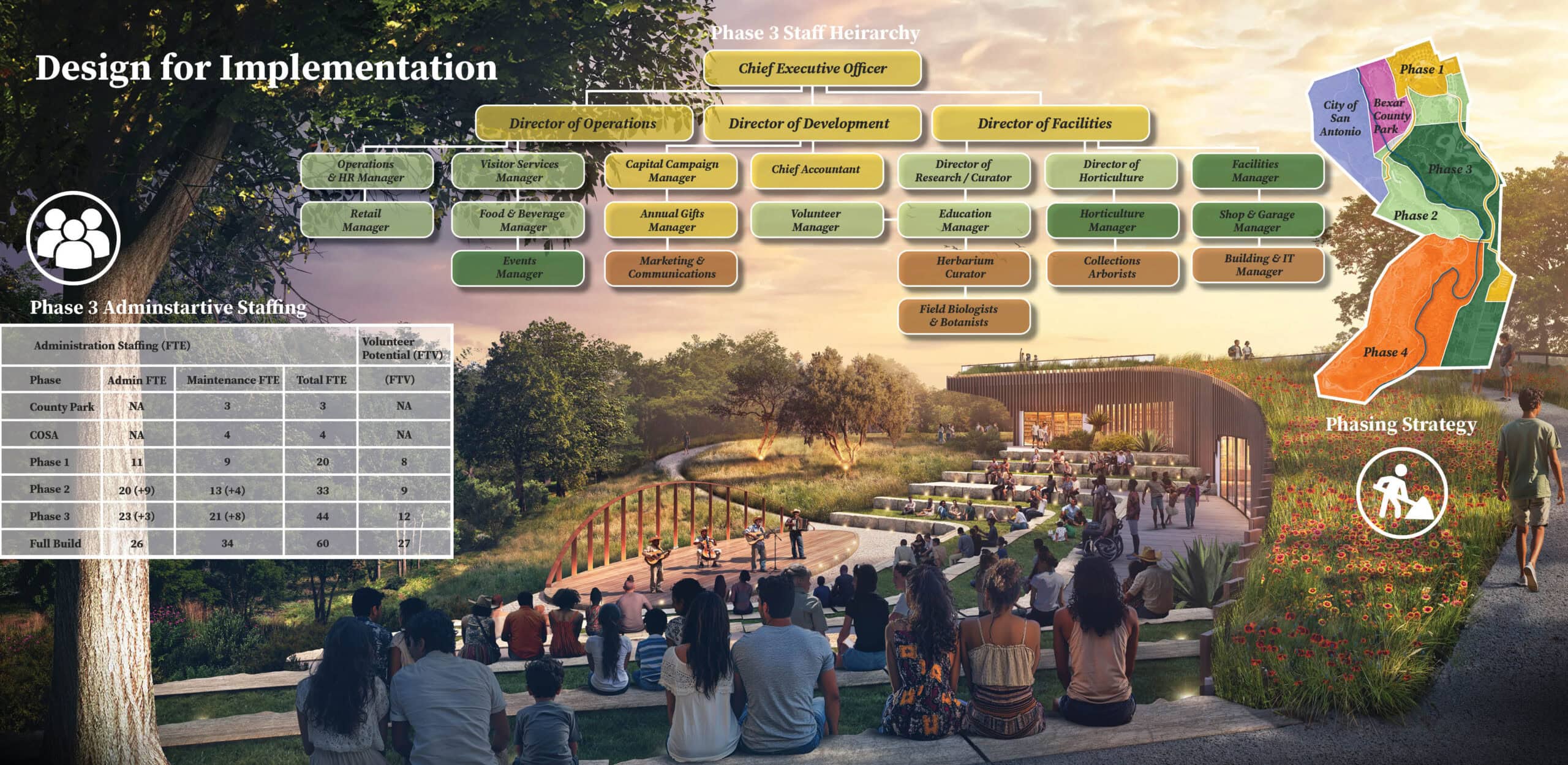
In addition to the Arboretum’s site plan, the design team developed a comprehensive Operations and Management plan, which outlines the project’s capital expenditures by phase, and links the Arboretum’s growth to staffing and equipment needs, as well as opportunities for earned revenue and potential partnerships. Informed by local experts and industry standards, the O&M plan sets forth a clear path for implementation, ensuring the arboretum will serve generations of San Antonians for years to come.
Diversity, Equity, and Inclusion Project Features
Arboretum San Antonio was designed with and for the residents of southeast San Antonio—a predominantly Hispanic community that has historically lacked access to high-quality green space and nature education. A robust, bilingual outreach process ensured local voices shaped every step of the design. Community feedback highlighted priorities such as trail safety, inclusive outreach for unhoused populations, and the need for accessible paths, shade, and cooling spaces. In partnership with the American Indians in Texas, the design team incorporated Indigenous land stewardship practices and interpretive elements, ensuring cultural representation and education are embedded in the Arboretum’s experience.
Plant List
- Agarita
- Anacua
- Bee Bush
- Black Willow
- Bluewood Condalia
- Box Elder
- Cedar Elm
- Eve’s Necklace
- Green Ash
- Gum Bumelia
- Hackberry
- Hogplum
- Honey Locust
- Honey Mesquite
- Littleleaf Sumac
- Live Oak
- Mexican Buckeye
- Mexican Plum
- Mulberry
- Osage Orange
- Pecan
- Possumhaw
- Senegalia
- Spanish Dagger
- Texas Persimmon
- Wafer Ash
- Wight’s Acacia
- Ashe Juniper
- Western Soapberry
The integration of rigorous ecological analysis, Indigenous knowledge, and multilingual community input sets a new standard for equity-driven design.
- ASLA Michigan jury
Team Members
SASAKI- Lead Master Planner
- Anna Cawrse – Principal in Charge
- Andrew Sell – Project Manager
- Chris Hardy – Landscape Architect
- Caroline Lindquist – Deputy Project Manager
- Booker Tieszen – Landscape Architect
- Isla Francis – Ecologist
- Juan Perez – Landscape Designer
Work5hop – Local Planning and Architecture Advisor
Pape-Dawson Engineers – Local Civil Engineering Advisor
MP Studios – Local Landscape Architecture Advisor
Urban Tree Company – Local Arborist
HR&A – Economic & Strategic Planning
Ximenes & Associates – Community Engagement
Jeanette Honermann – Community Liason
Cielo Strategy Group – Project Marketing
Documents and Media
Planning Docs (if applicable):